Pseudo-Holographic Instrument Cluster
Using the depth between the steering wheel and the driver's eyes as an interface: urgent information comes closer, everything else stays back.
- Company
- HARMAN International
- Year
- 2013 — 2017
- Role
- Concept, prototypes and patenting across auto-stereoscopic, head-tracked and AR headset implementations
- Team
- Future Experience Team
- Location
- Palo Alto, CA
Technology
- Auto-stereoscopic displays
- View-dependent rendering
- Head tracking
- Volumetric display concepts
- HoloLens adapted for moving vehicles
- Gesture control
01The opportunity
Instrument clusters were going digital, but they were still flat. There is a volume of empty space between the steering wheel and the driver's face, and depth is something the eye reads instantly, without conscious effort. Nobody was using it.
02The idea
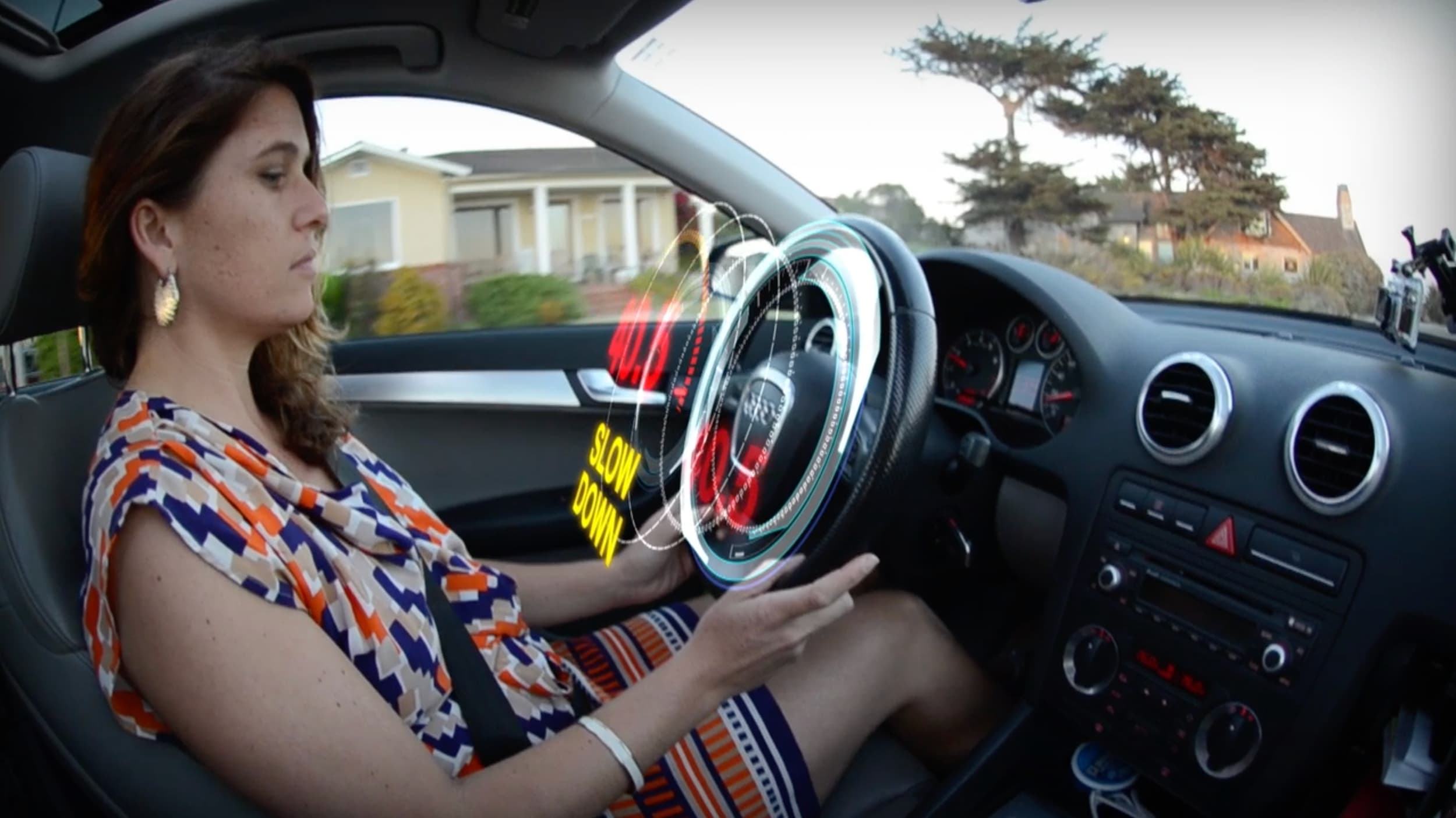
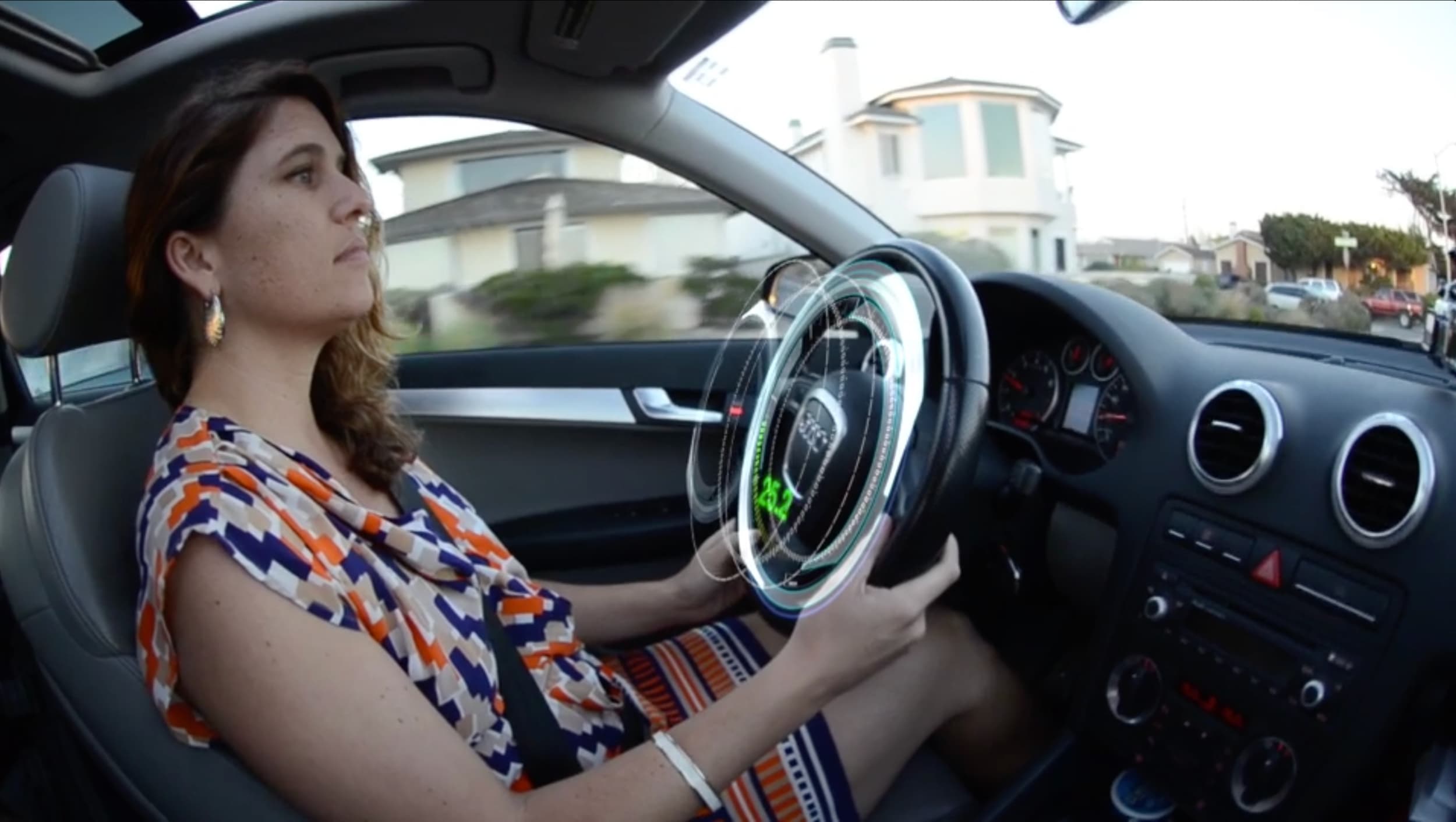
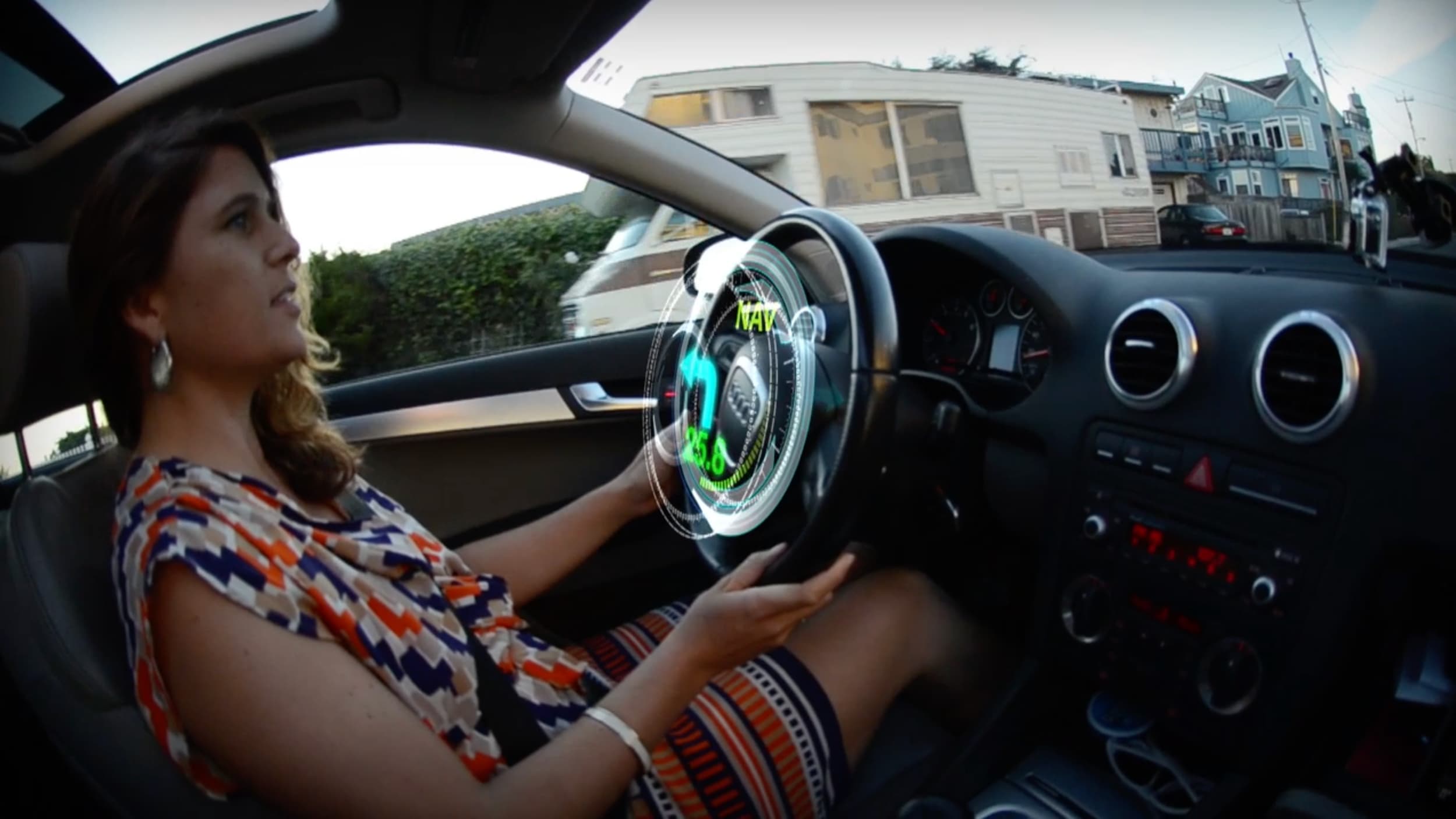
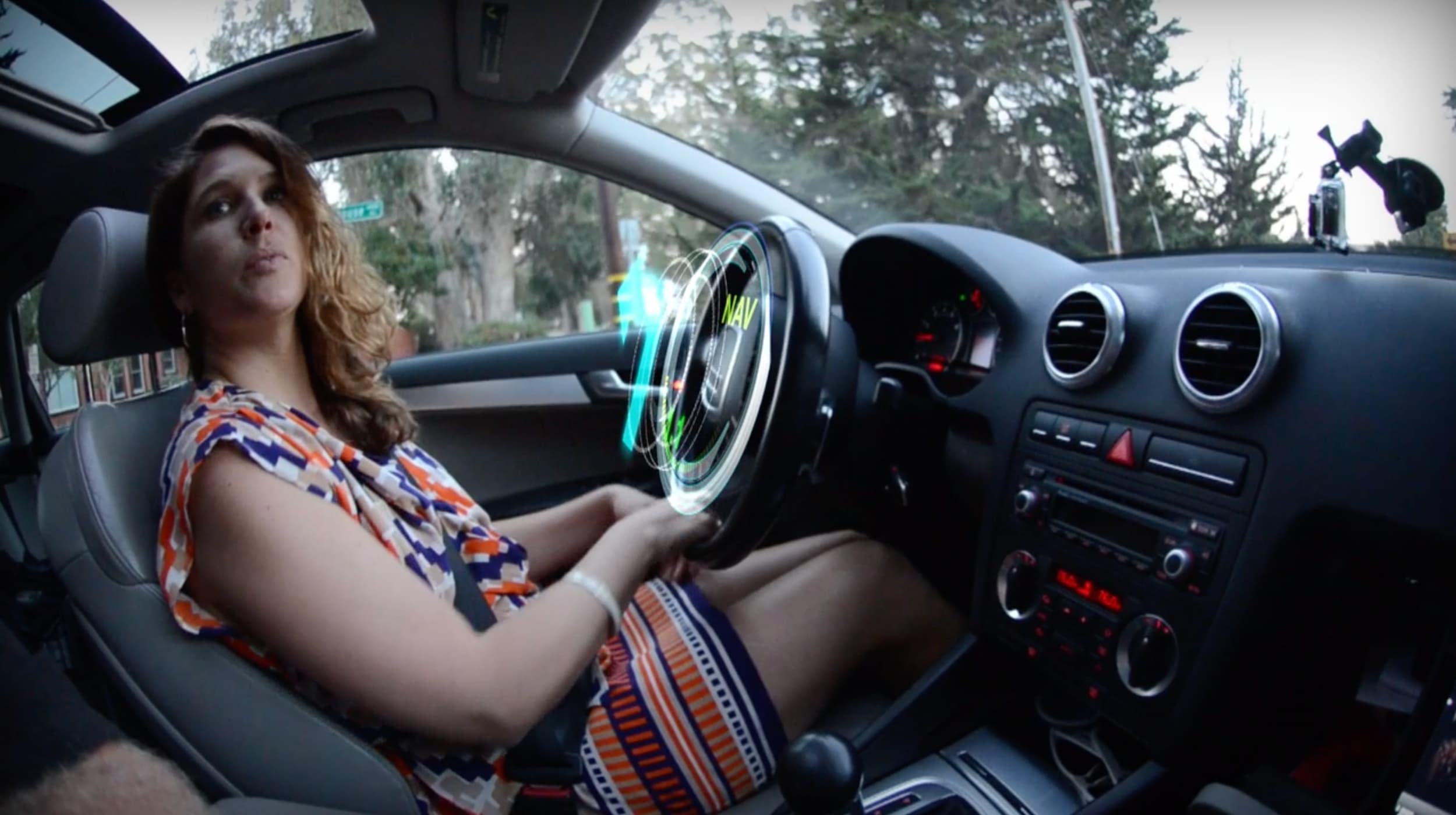
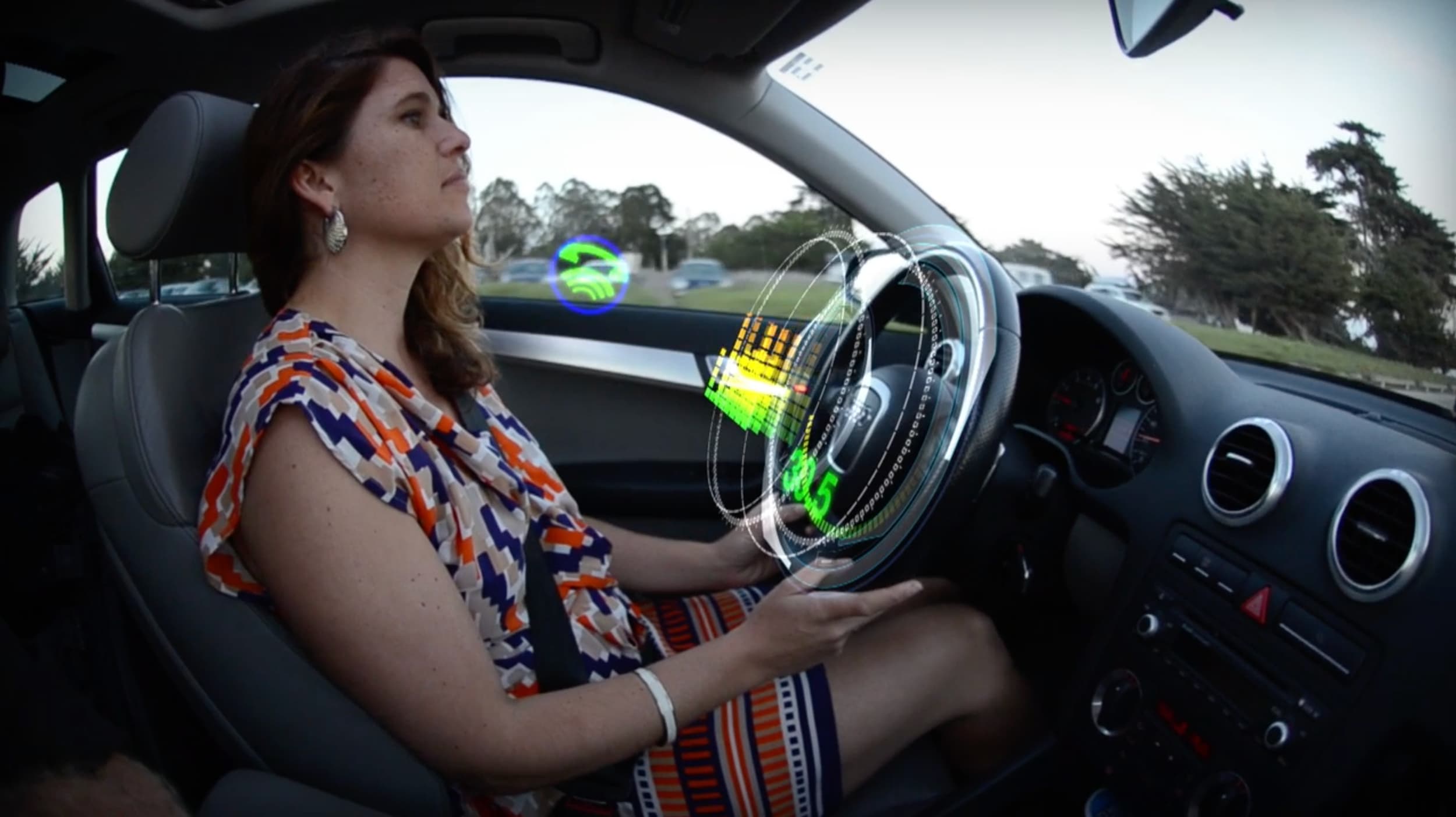
A 3D-capable in-cabin display, combined with gesture control, that renders contextual information such as alerts and navigation in the driver's area of focus and uses the Z dimension as a language. Time-sensitive alerts move closer to the eyes to capture attention; less critical information sits farther back. A navigation prompt drifts forward as the turn approaches, communicating urgency without distraction.
03My role
I developed the concept and the prototypes, from the first auto-stereoscopic implementation through head-tracked video see-through and HoloLens-based systems adapted for moving vehicles, and worked on the patents that protect the interaction methods. The most practical path to production is lightweight AR glasses, brought in by the driver or tethered to the car.
04How it worked
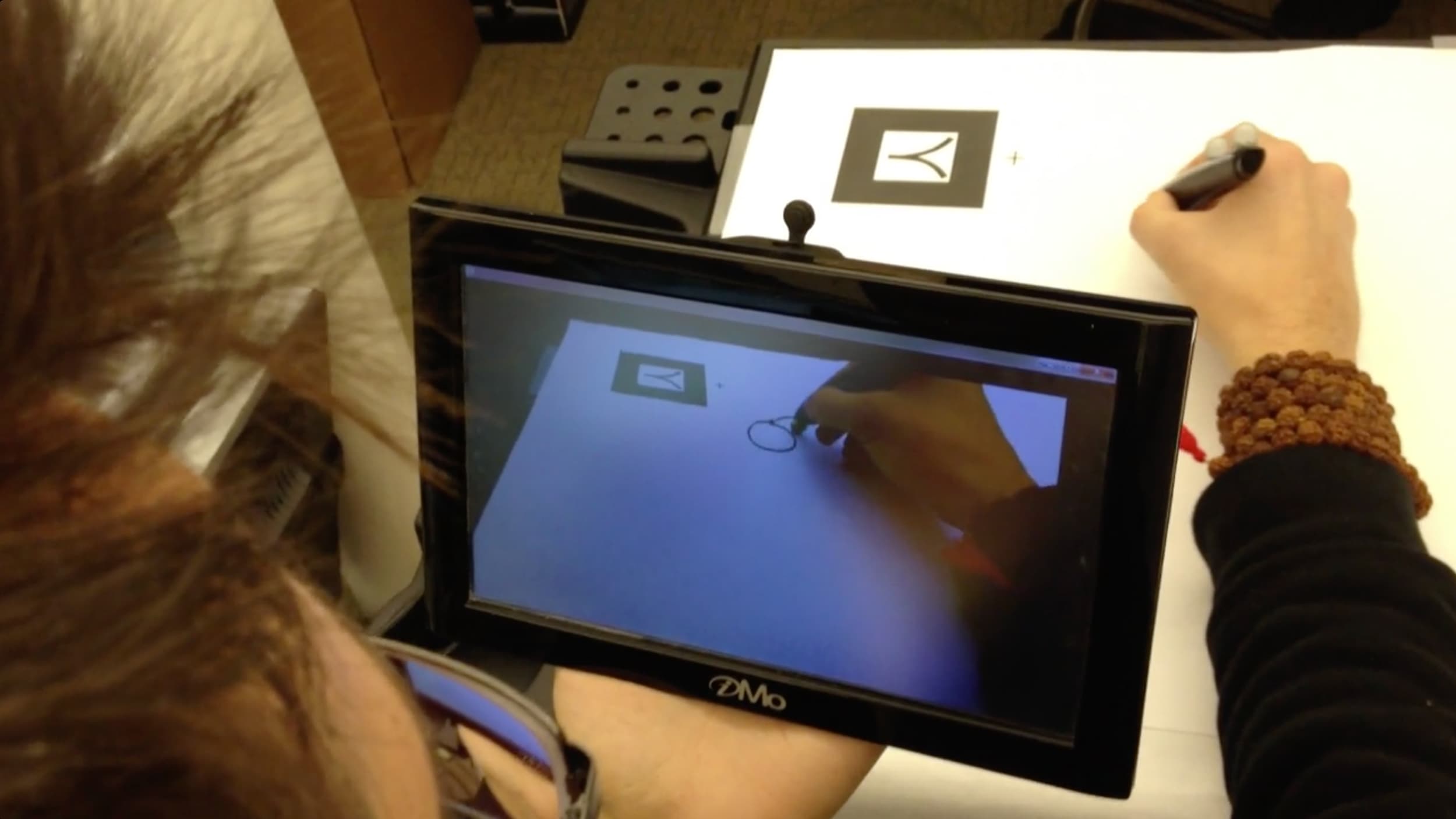
The first proof of concept replaced the cluster with a stereoscopic 3D display using view-dependent rendering, so the perspective shifts with the driver's head and objects appear to sit at real depths, a pseudo-hologram. Two layers make up the interface: foreground gauges for speed and gear, and a 3D navigation system behind them. It reads cluttered in a flat rendering and clear on the 3D display. Gesture control, from the interactive sound panorama work, lets the driver act on what the display shows.
05Prototype / product
06Outcome
Working prototypes across three display technologies, a UX film, and granted patents for the virtual 3D instrument cluster with 3D navigation, in the U.S. and Europe.
- Three generations of prototypes
- Granted patents (U.S. and EP)
07Patents, press, links
Patents
- US 10062204 B2Virtual three-dimensional instrument cluster with three-dimensional navigation system2018
- EP 2896531 B1Virtual three-dimensional instrument cluster with three-dimensional navigation system2018