See-Through Dashboard
Robotic stereo cameras and view-dependent 3D rendering that let the driver look down through the dashboard at the road directly ahead.
- Company
- HARMAN International
- Year
- 2014 — 2015
- Role
- Project lead · built the proof-of-concept prototypes: actuated cameras, view-dependent rendering, stereoscopic 3D
- Team
- Future Experience Team
- Location
- Palo Alto, CA
Technology
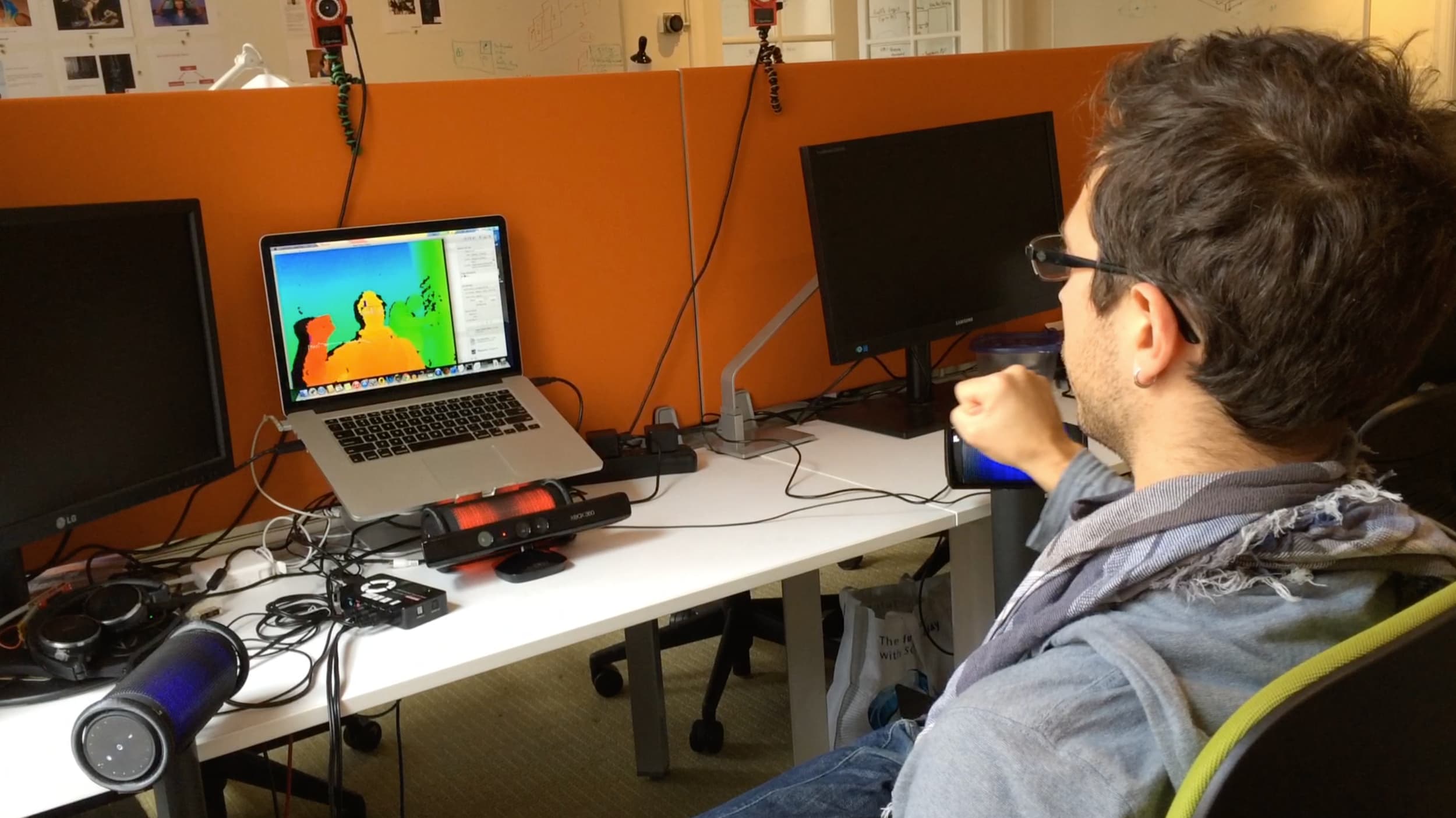
- Robotically actuated stereo camera pair
- Head tracking
- View-dependent rendering
- Stereoscopic 3D (zSpace)
- Pan-tilt camera control
01The opportunity
The dashboard hides a wedge of road right in front of the car: the low, close area that matters most when parking, creeping in traffic or pulling up to a curb. Backup cameras had solved this for the rear. The front, where the driver's own eyes are, was still blind.
02The idea
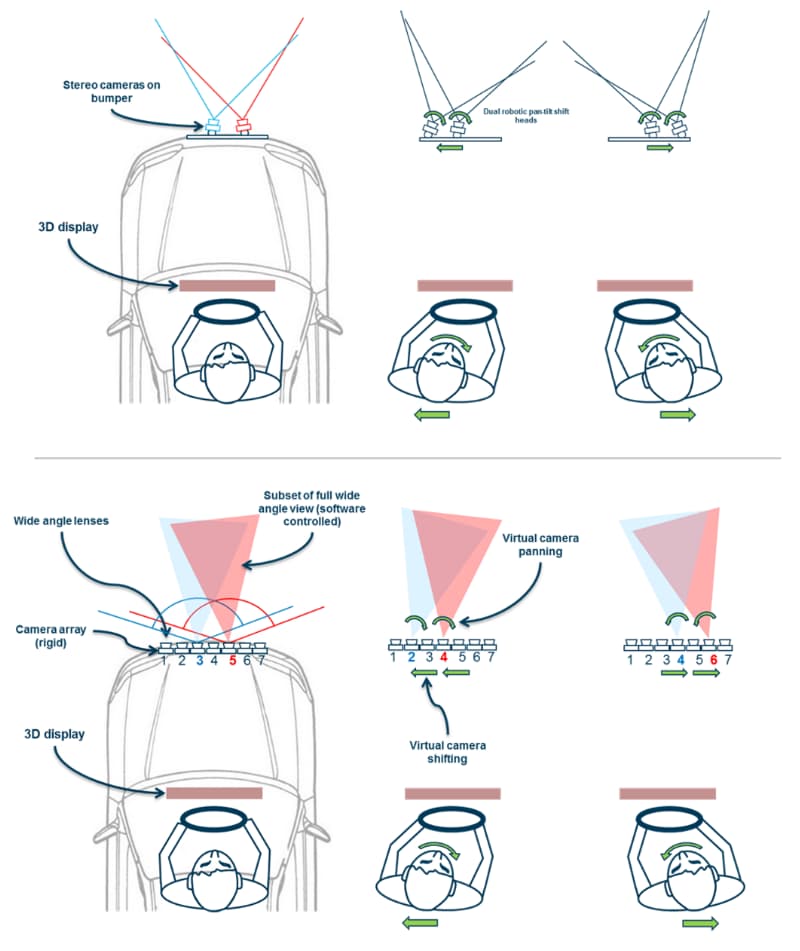
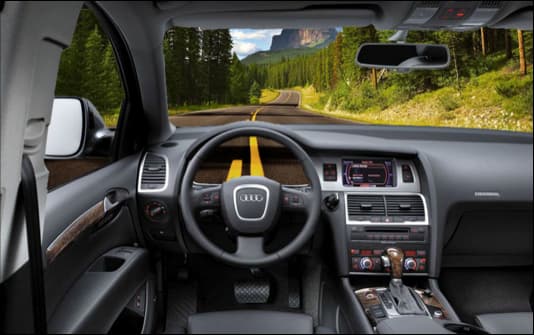
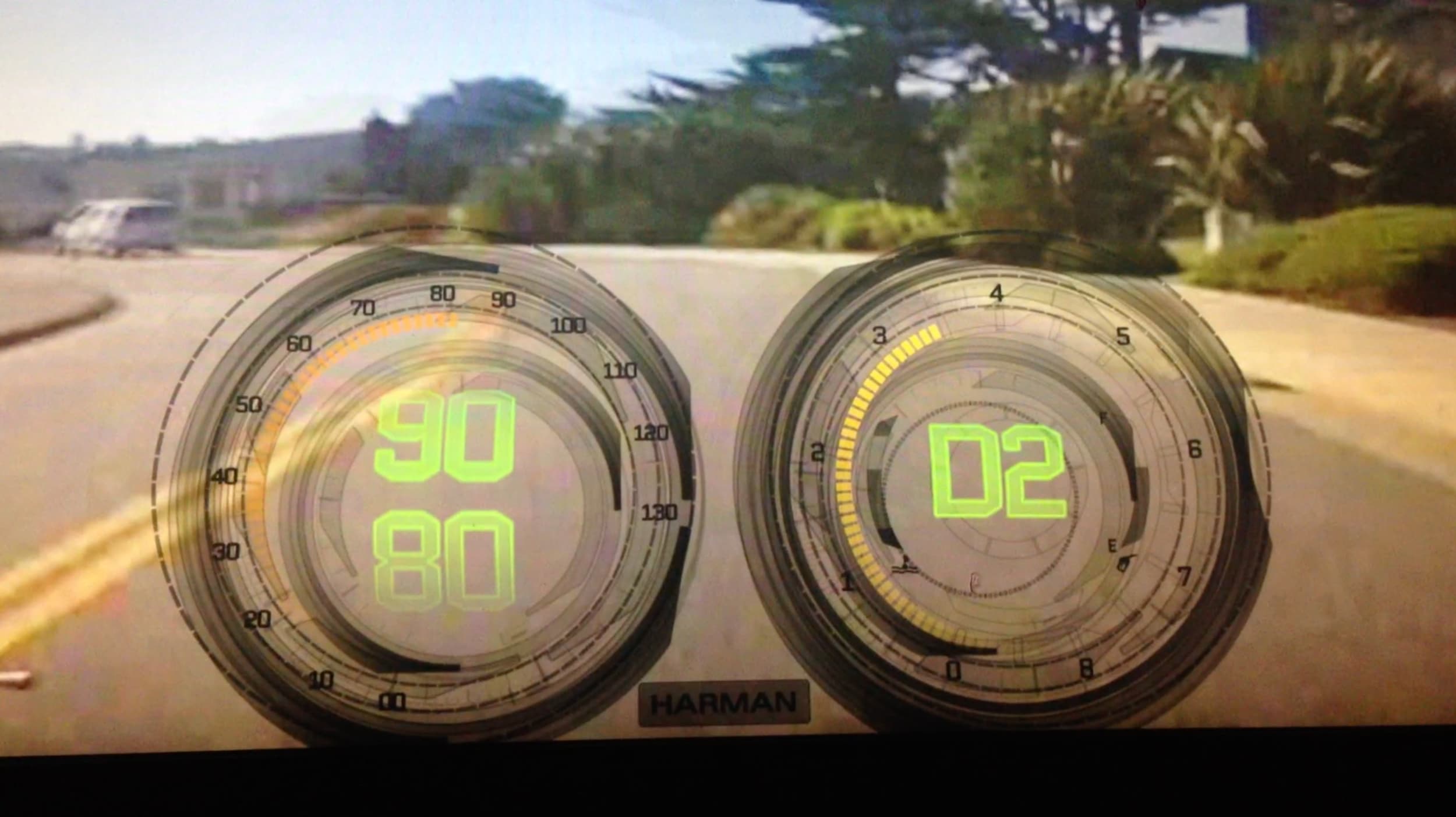
Extend the driver's vertical field of view downward through the instrument cluster. A stereo camera pair on the bumper feeds a 3D display in the cluster; view-dependent rendering makes the road appear at its real distance rather than on the display surface, so the cockpit feels transparent.
03My role
As project lead I built the proof-of-concept prototypes: the mechanically actuated cameras, the view-dependent rendering and the stereoscopic 3D rendering on a zSpace display. The work produced two granted patents.
04How it worked
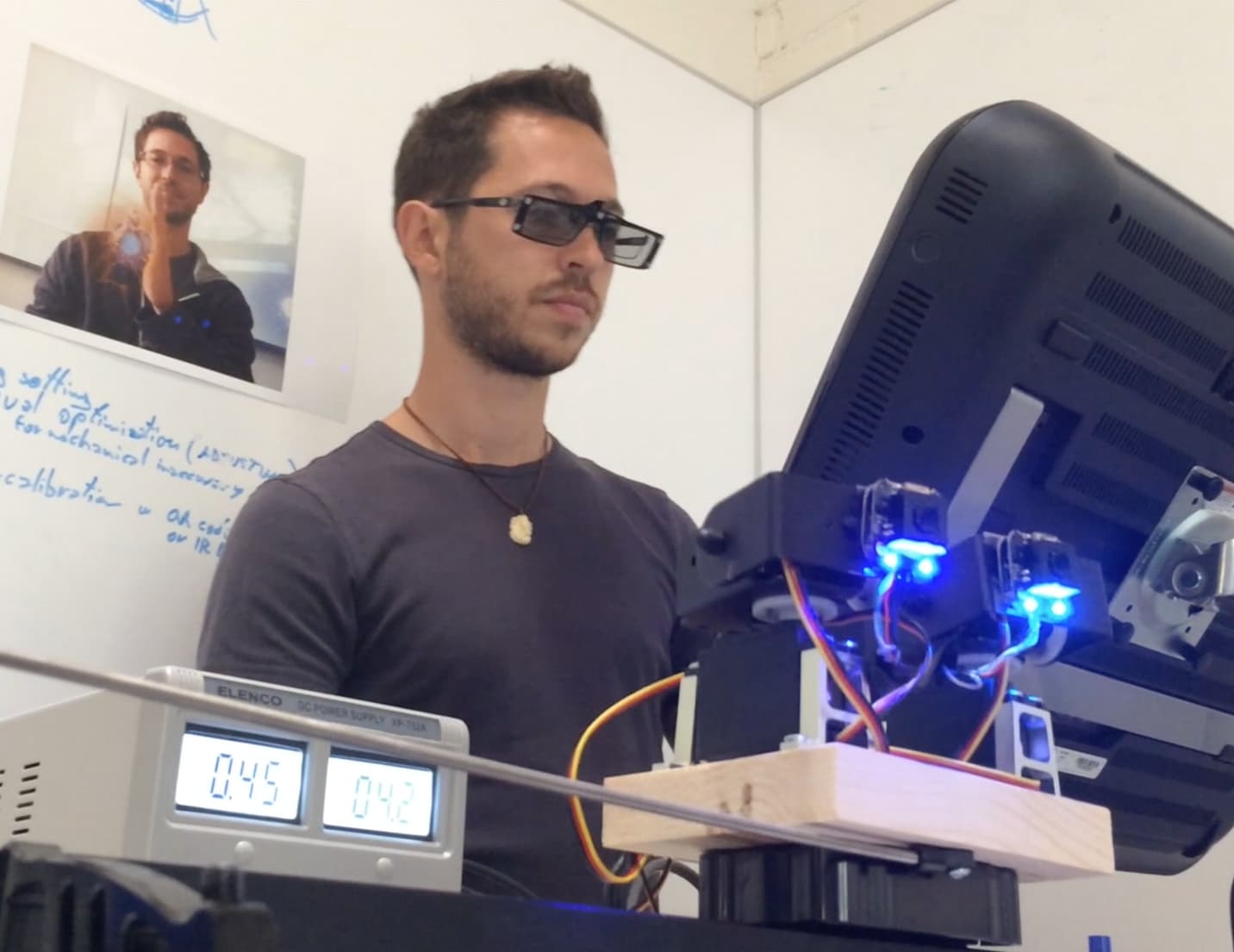
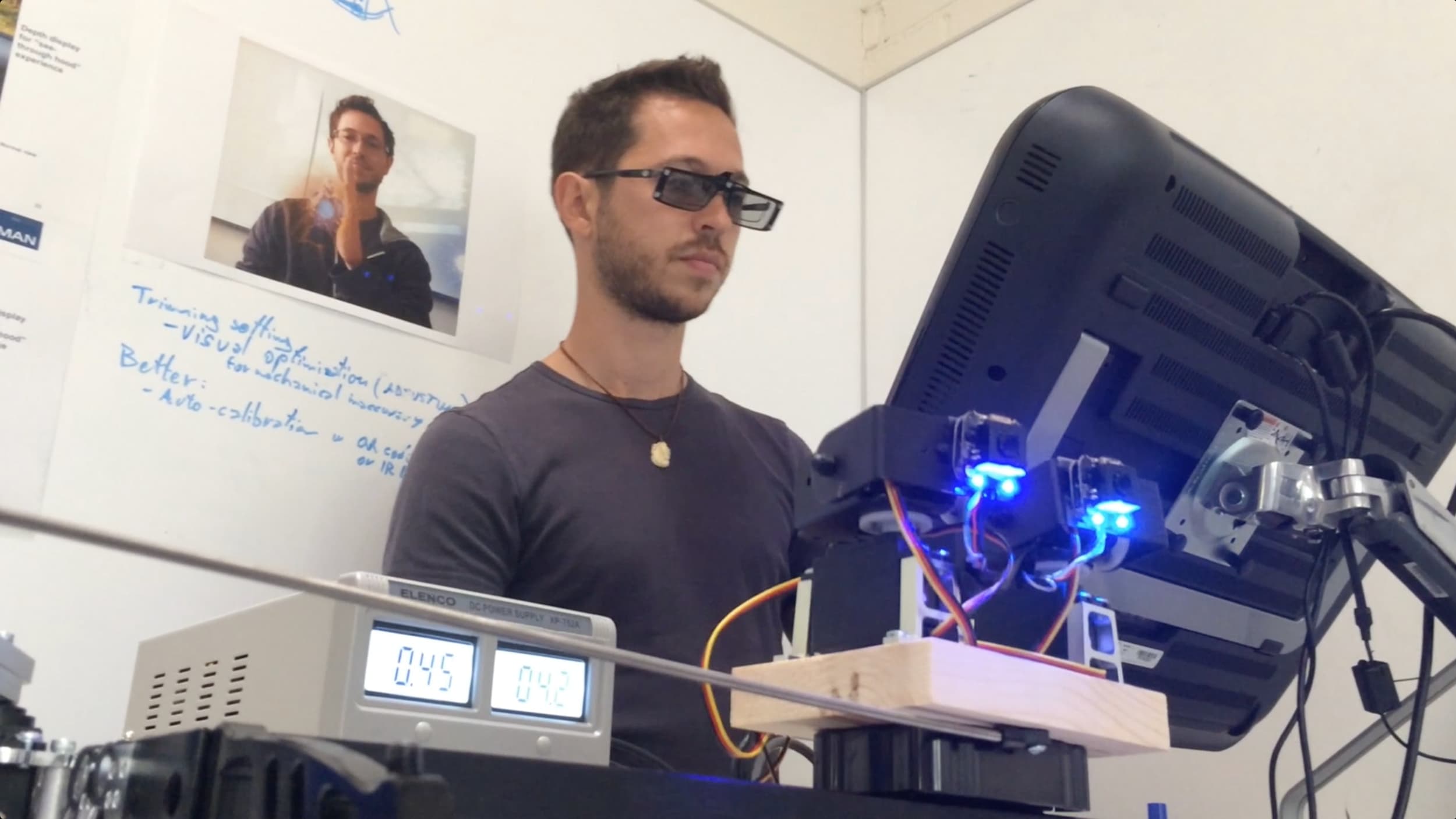
A stereo camera pair sits on a robotically actuated rail with pan-tilt on each camera. High-resolution head tracking drives the cameras to match the driver's eye positions, and the zSpace 3D screen renders the two feeds view-dependently so the depth stays in sync with the eyes. In the proof of concept the robotic rig demonstrates the synchronization; a production system would use a solid-state camera array on the bumper with no moving parts, and glasses-free auto-stereoscopic displays.
05Prototype / product
06Outcome
A working proof of concept and two granted patents, a virtual see-through instrument cluster with live video and a virtual 3D instrument cluster with 3D navigation, which contributed to the advancement of automotive visualization technologies.
- Working prototype
- Two granted patents
07Patents, press, links
Patents
- US 9756319 B2Virtual see-through instrument cluster with live video2017
- US 10062204 B2Virtual three-dimensional instrument cluster with three-dimensional navigation system2018
Links