Augmented Reality Writing
A 3D pen that writes on any surface and in mid-air, with the ink rendered in augmented reality. Built in 2011, patented in 2018.
- Company
- HP / Palm
- Year
- 2011
- Role
- Concept, system design and implementation · inventor on the granted patent
- Team
- Future Concepts and Prototyping team, HP/Palm R&D Center
- Location
- Sunnyvale, CA
Technology
- OptiTrack motion capture
- Tracked pen and tablet
- Video see-through mobile AR
- Persistent 3D drawing
- Environment color picking
- C
01The opportunity
In 2011 tablets and styluses were arriving together, and every pen was trapped on the glass. HP/Palm's Future Concepts team was looking at unconventional uses of tablets and pens. I wanted to know what happens when the pen leaves the surface.
02The idea
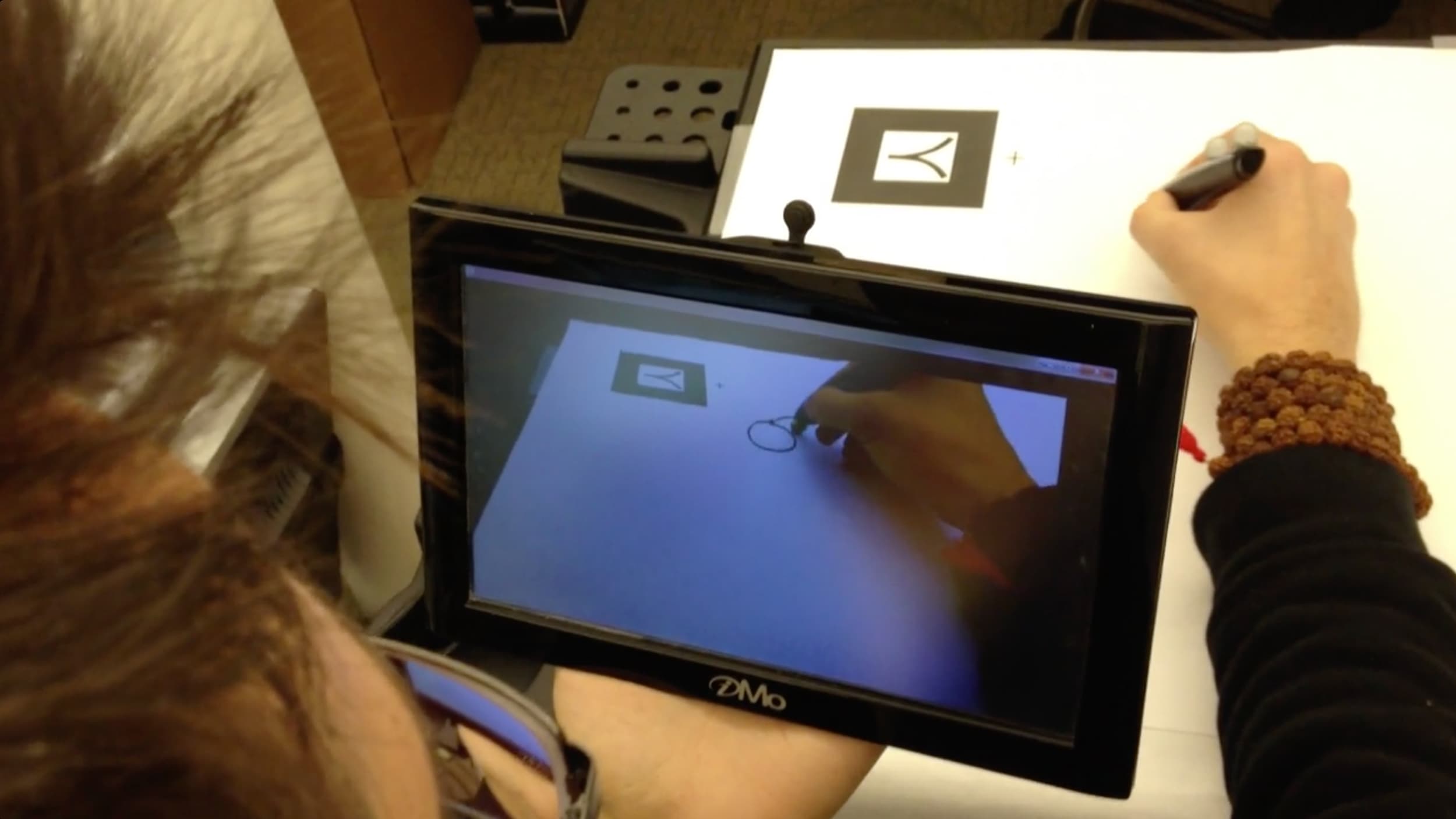
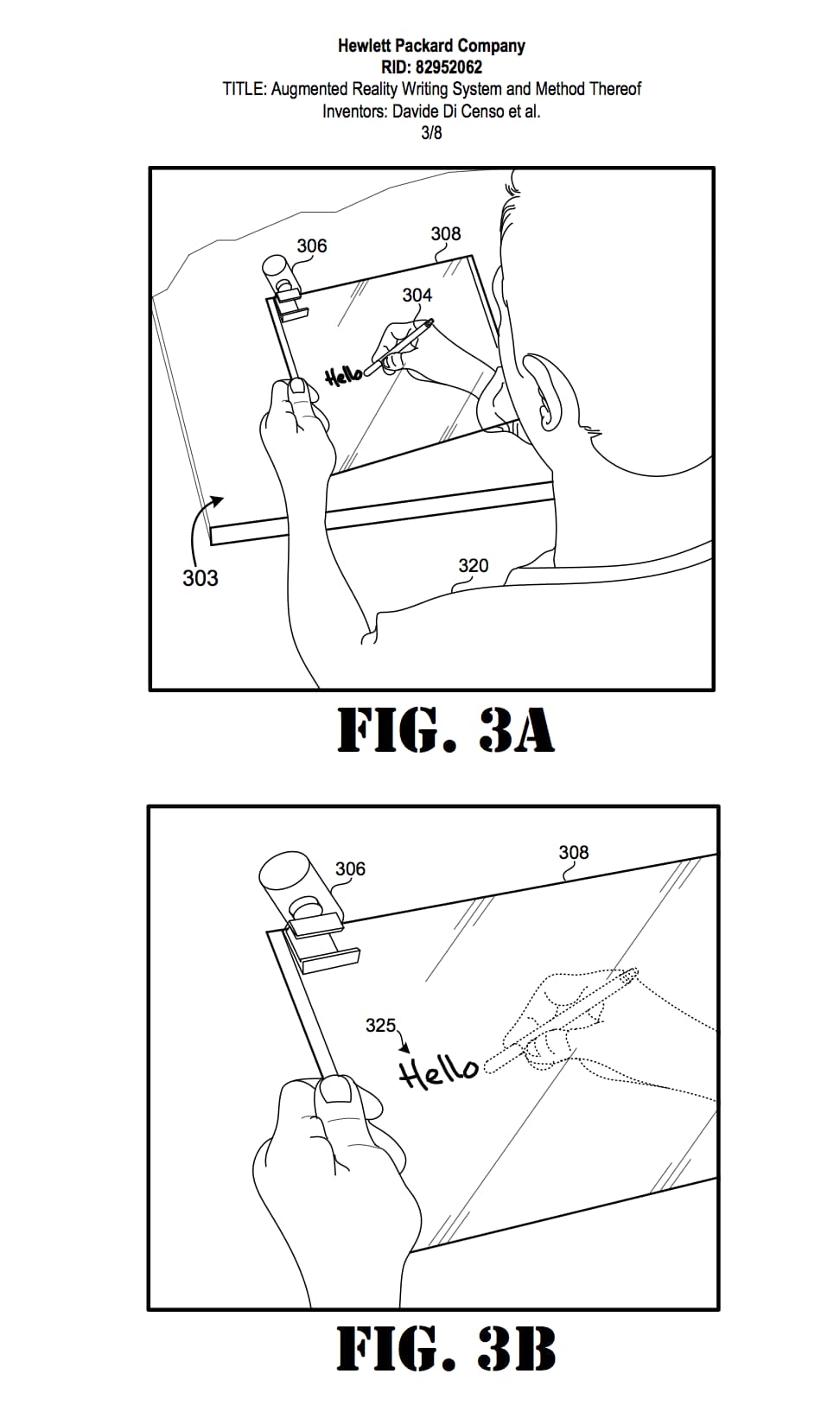
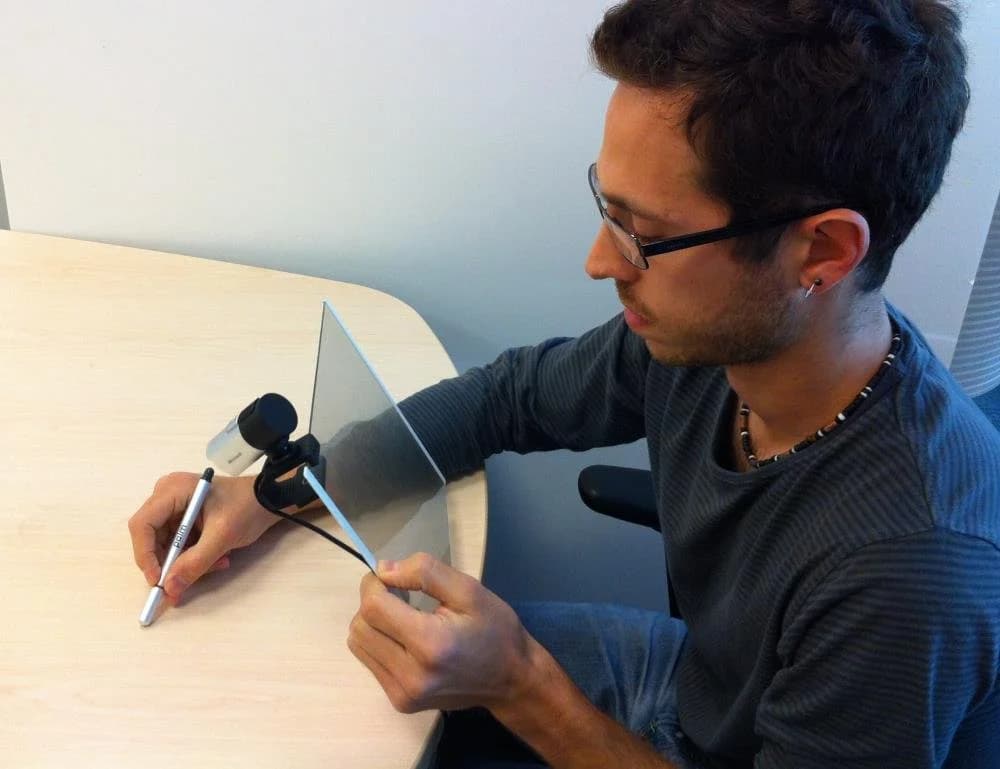
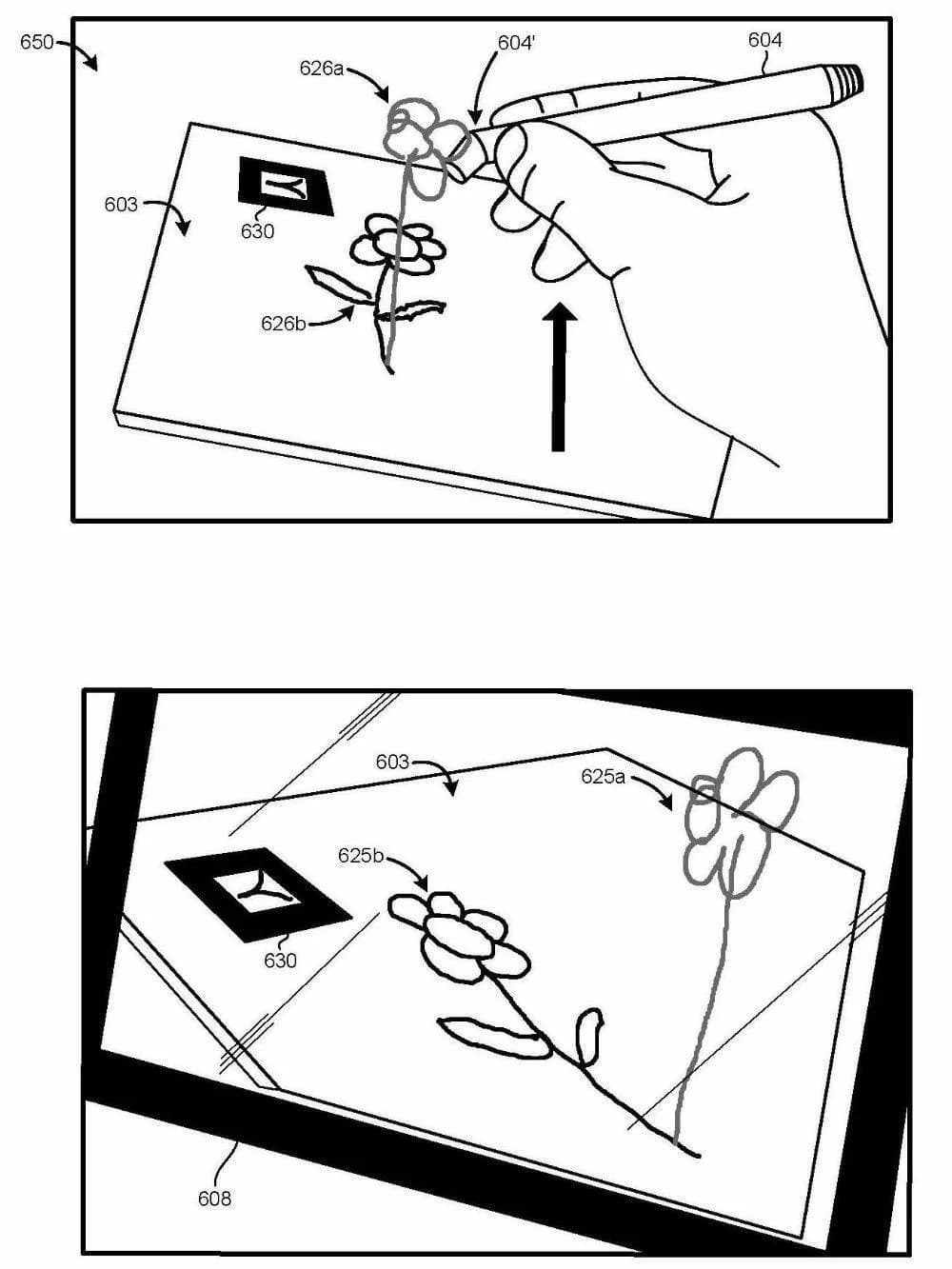
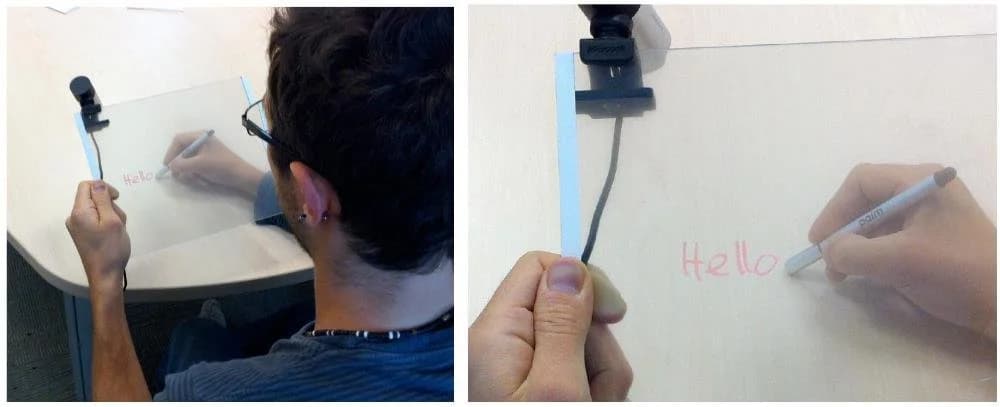
Write or draw anywhere: on the table, on the wall, or in the air above them. Nothing physical is marked. The strokes exist as persistent 3D geometry in the room and become visible through a tablet or phone acting as a mobile AR window. Pick a color from the environment first, then draw with it.
03My role
I developed the prototype at HP/Palm: the concept, the tracking integration, the AR rendering and the interaction, with the proof-of-concept code written in C. The work was completed in December 2011 and resulted in a granted patent after six and a half years of review.
04How it worked
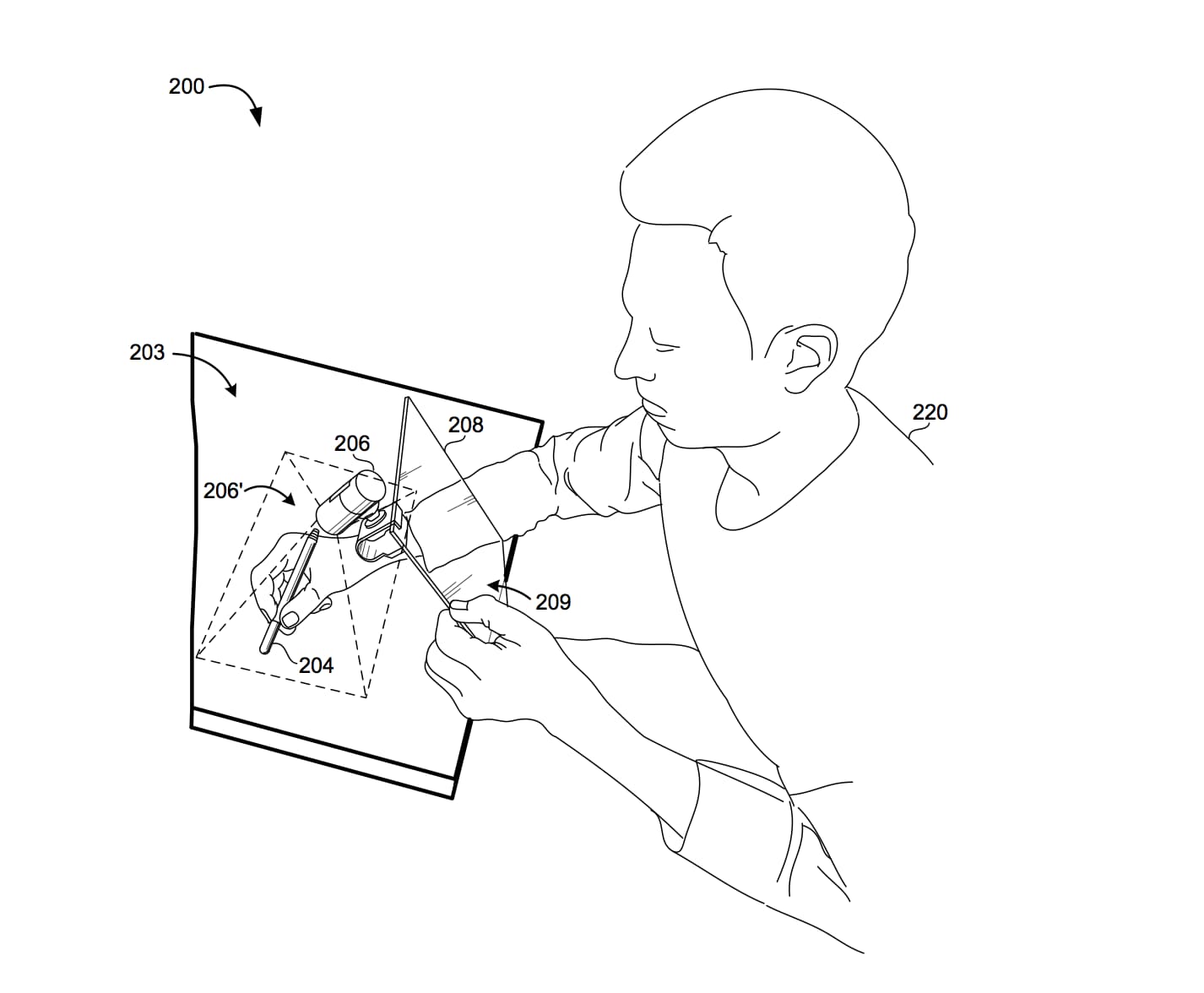
An OptiTrack motion capture system tracks the pen and the tablet in six degrees of freedom. Pen strokes are stored as 3D geometry anchored to the room. The tablet's camera feed is composited with the strokes from the tablet's tracked viewpoint, so the writing appears exactly where it was made, on the surface or above it, and stays there as the viewer moves. The production intent was on-device tracking; the external sensors were a means to prove the experience.
05Prototype / product
06Outcome
A working proof of concept completed in December 2011 and a granted U.S. patent, Augmented reality writing system and method thereof, issued in 2018 after the IP moved to Qualcomm with HP/Palm's portfolio.
- Working prototype, December 2011
- Granted U.S. patent (2018)
07Patents, press, links
Patents
- US 10067568 B2Augmented reality writing system and method thereof2018