JBL × Google Soli Connected Speaker
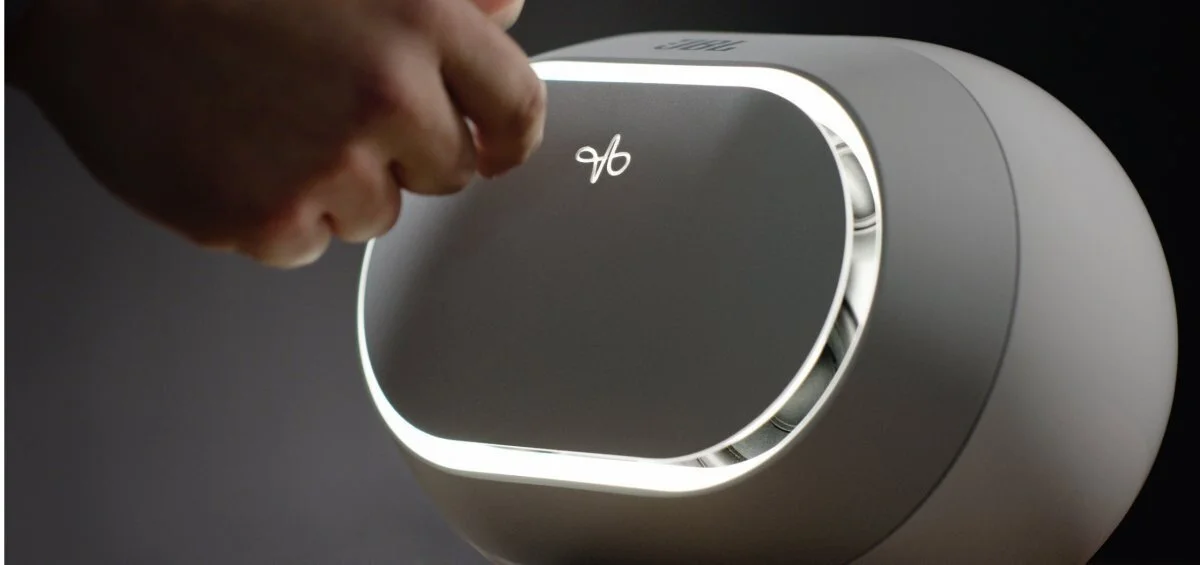
A JBL home speaker controlled by radar-sensed micro-gestures and a light-feedback interface, unveiled live on stage at Google I/O 2016.
- Company
- HARMAN International
- Year
- 2016
- Role
- Project lead for HARMAN · concept, light-feedback interface, engineering integration, partner collaboration
- Team
- Future Experience Team, with Google ATAP
- Location
- Palo Alto, CA
Technology
- Google Soli radar sensing
- Micro-gesture recognition
- Adaptive LED feedback
- Mechanical redesign / CAD
- Embedded audio
01The opportunity
Google's Advanced Technology and Projects group (ATAP) had built Soli, a miniature radar that senses fine finger movement. It was a remarkable sensor looking for a product. Voice and touch were the default ways to control a connected speaker; neither is great when your hands are busy or the room is loud.
HARMAN's Future Experience team had spent years on gesture interaction and feedback. The opportunity was to put the two together and show, with a real product from a real brand, what touchless control could feel like.
02The idea
Integrate Soli into a JBL connected home speaker so that volume, track changes and power are controlled with small finger gestures, with no buttons, knobs or screens.
The part that made it work was feedback. Gestures that happen in mid-air need an answer, so we designed a light-feedback interface that visually confirms each gesture and closes the interaction loop. That idea, more than the radar itself, is what made the prototype feel finished.
03My role
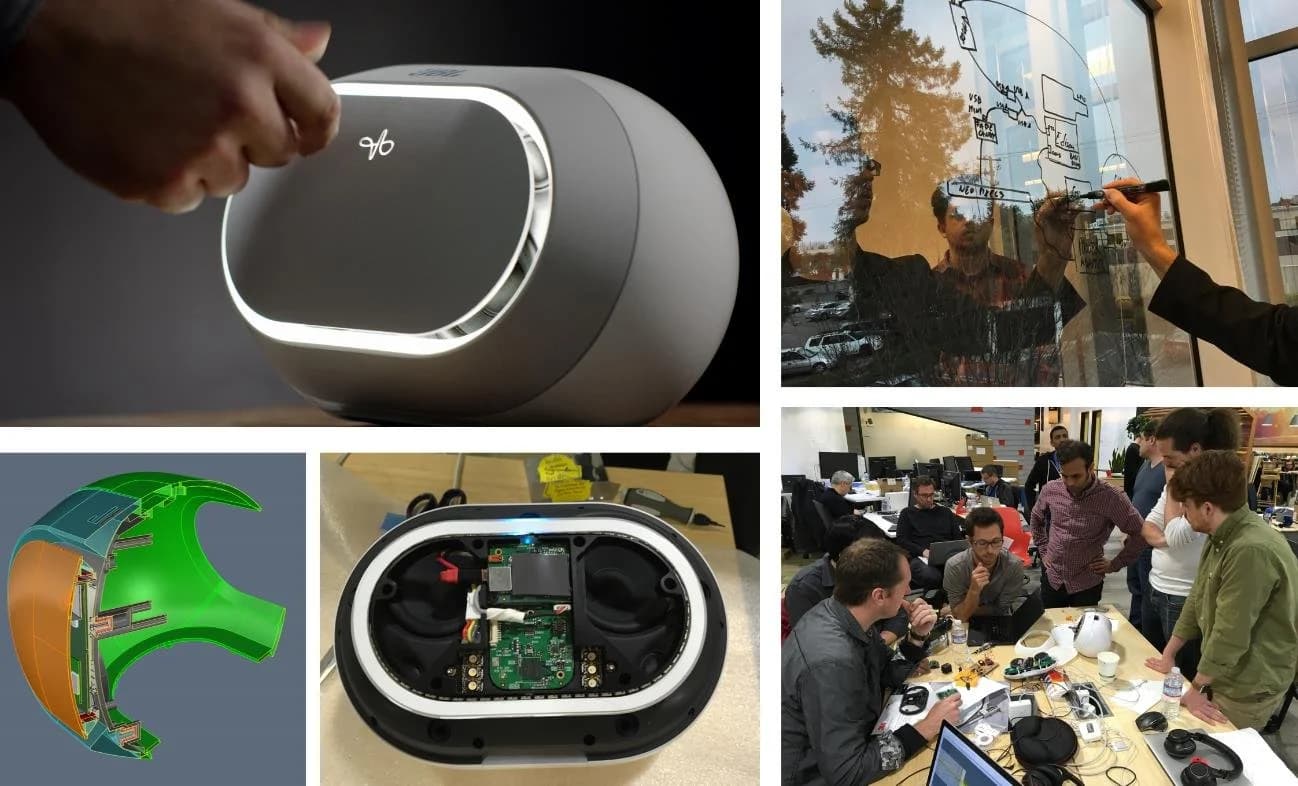
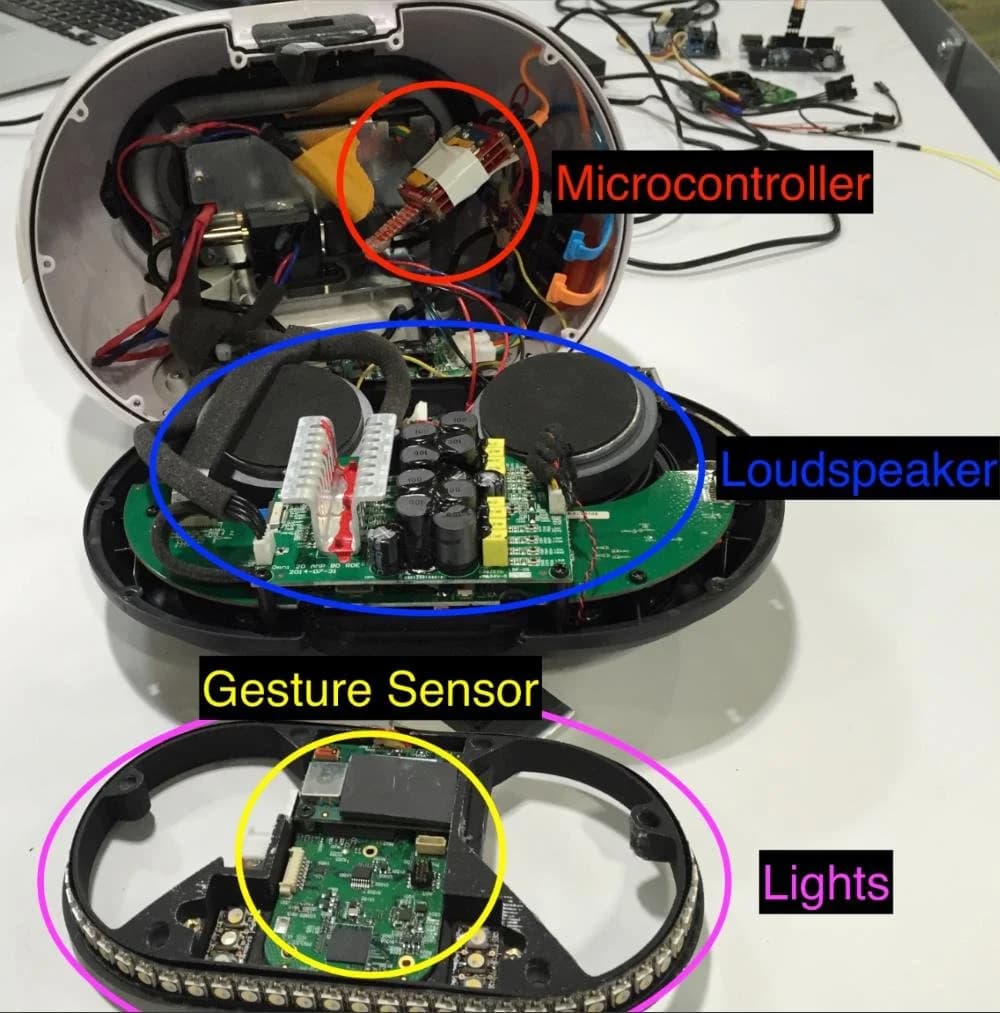
I led the project on HARMAN's side, working directly with Dr. Ivan Poupyrev's Soli team at ATAP. I contributed to the interaction concept and the light-feedback design, and coordinated the engineering work in HARMAN's FX lab: integrating the sensor, updating the mechanical design, and packing the electronics into the speaker's casing.
04How it worked
A Soli radar module inside the speaker senses micro-gestures such as a finger rub for volume or a swipe for track changes. Recognized gestures drive the audio pipeline and an adaptive LED ring that responds in real time, so the user sees that the speaker has understood before they hear the result. The mechanical design was revised to fit the sensor and electronics, as the CAD model and the open speaker below show.
05Prototype / product
06Outcome
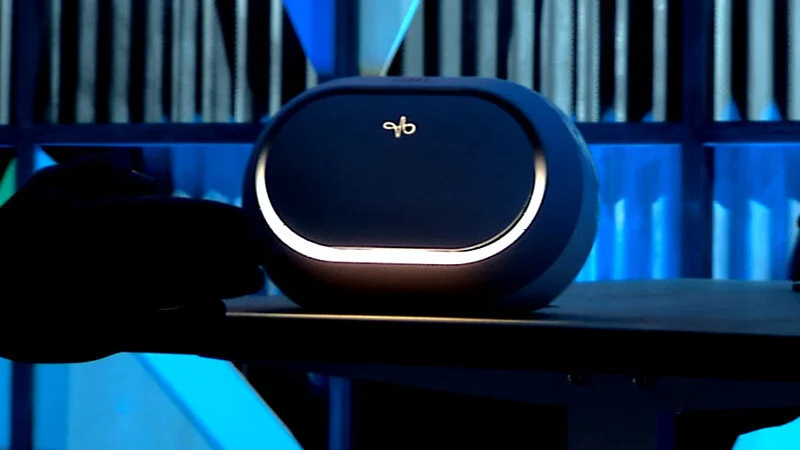
The fully functional prototype debuted live on stage at Google I/O 2016, presented by Dr. Poupyrev, and demonstrated gesture control for volume, track changes and power alongside the adaptive lighting interface. Financial press reported a positive market reaction to the announcement, with HARMAN's stock rising 4.81% following the news.
The collaboration produced two patents jointly held by HARMAN and Google: a utility patent for a gesture-enabled audio device with visible feedback and a design patent for the loudspeaker.
- Live demo at Google I/O 2016
- Two joint HARMAN / Google patents
- Positive market reaction reported by financial press
07Patents, press, links
Patents
- US 10685550 B2Gesture-enabled audio device with visible feedback2020
- US D862416 S1Loudspeaker2019