Pupil-Based Driver Monitoring System
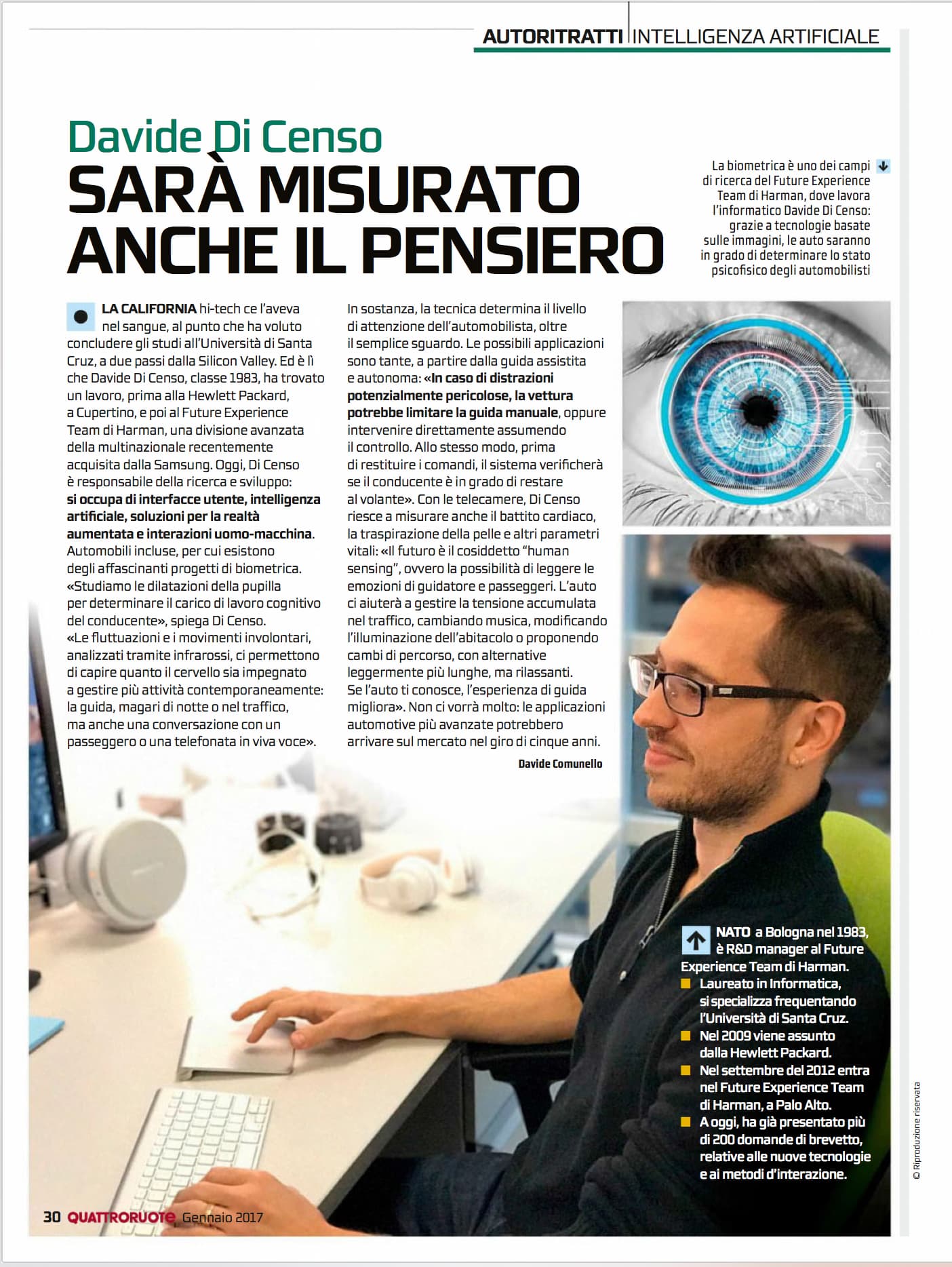
Measuring a driver's mental workload from pupil dilation with a single in-cabin camera. Shown at CES 2016, it became HARMAN's Driver Monitoring System.
- Company
- HARMAN International
- Year
- 2016
- Role
- Led the project from conception to first proof of concept · managed internal and external resources · CES 2016 demonstration
- Team
- Future Experience Team
- Location
- Palo Alto, CA
Technology
- Driver-facing camera
- Pupil tracking
- Signal processing and filtering
- Cognitive load estimation
- Driving simulator integration
- ADAS threshold adaptation
01The opportunity
In-cabin cameras were arriving in cars for occupant detection and drowsiness monitoring. Nobody was using them for the harder question: how much of the driver's mind is actually on the road? Existing approaches to cognitive load needed sensors in seats and steering wheels, or biometric sensors touching the driver.
02The idea
Pupil dilation is a well-studied response to mental effort. A driver-facing camera can measure it continuously and without contact. With the right filtering to separate the cognitive response from light and other reflexes, the car can detect high cognitive load and mental multitasking, and then adapt: put a phone in do-not-disturb, hold non-urgent notifications, or lower the intervention thresholds of ADAS systems.
03My role
I worked on the project from conception to the completion of the first proof of concept, managed the internal and external resources that built it, and presented the first prototype at CES 2016.
04How it worked
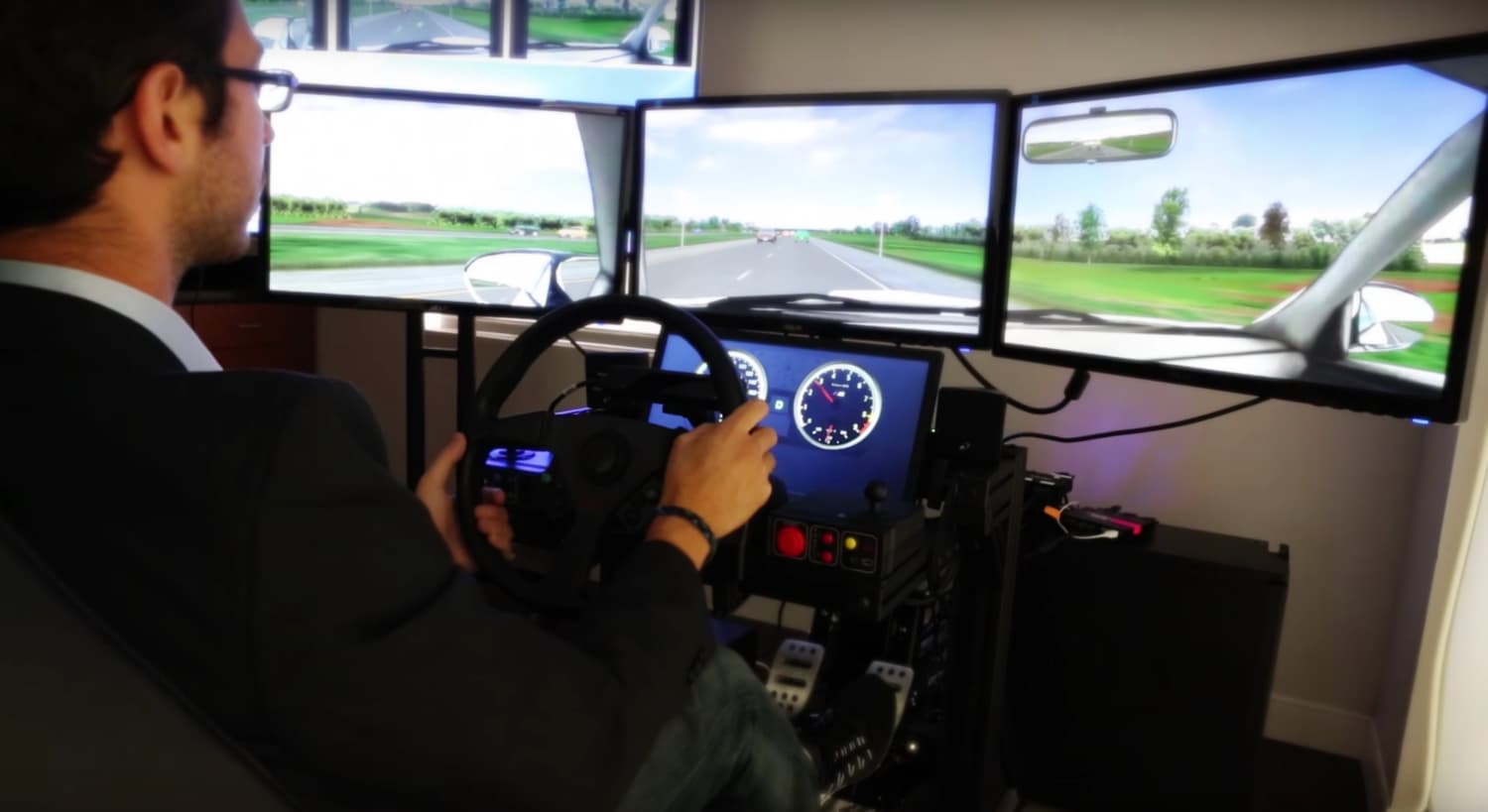
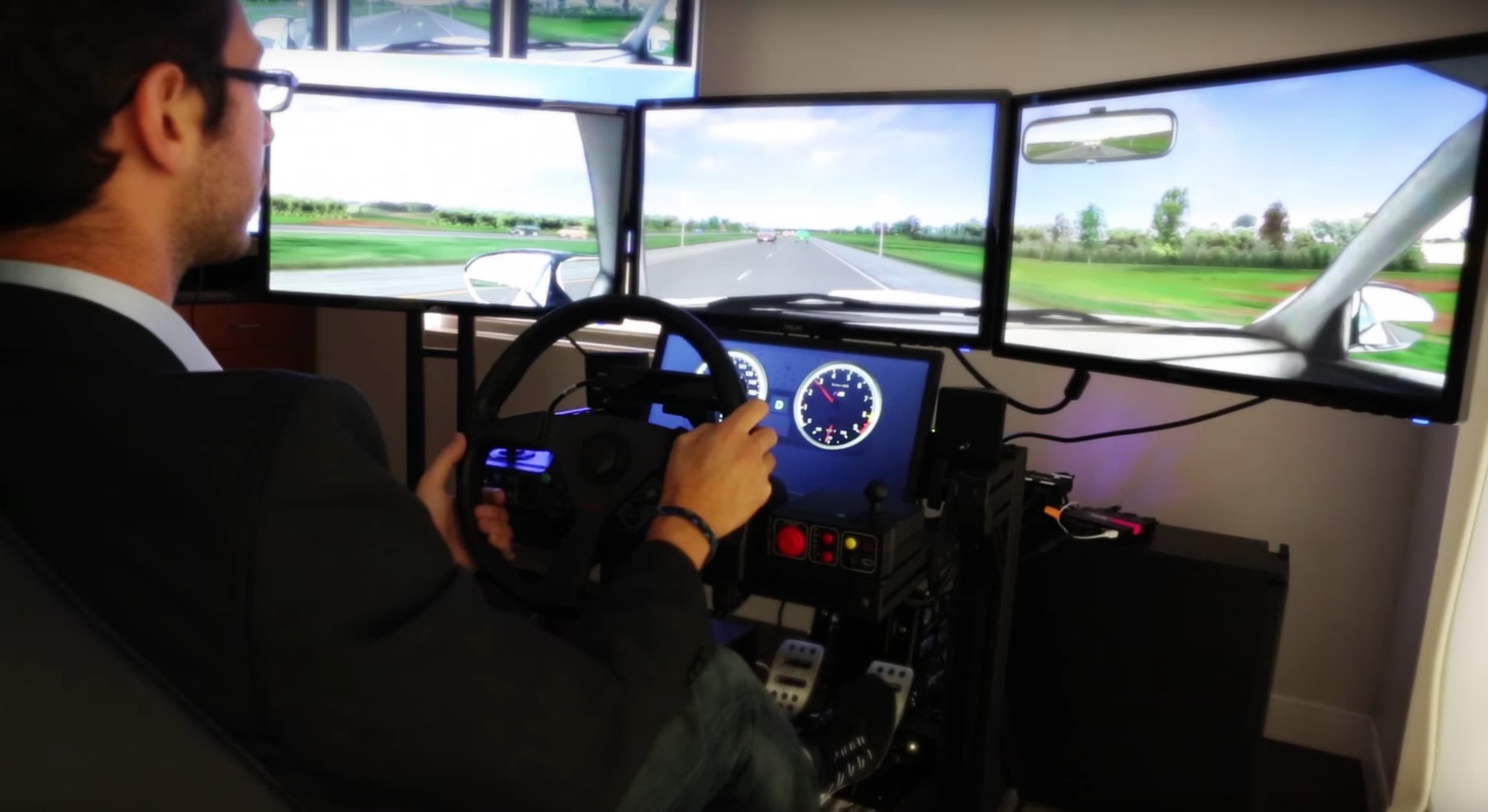
A driver-facing camera continuously captures pupil size. A proprietary algorithm analyzes the pupil reflex with advanced filtering and signal processing to isolate responses triggered by high cognitive load rather than by lighting changes. The calculated workload is exposed to the vehicle's other systems, which adjust user interfaces and ADAS behavior to reduce physical and mental distraction. The demonstrator ran inside a multi-screen driving simulator, where cognitive overload and driving mistakes could be induced and measured safely.
05Prototype / product
06Outcome
The system was named a finalist in CTIA's 10th Annual Emerging Technology Awards and was showcased again at the Geneva International Motor Show in 2019. HARMAN's Driver and Occupant Monitoring System, part of its ADAS product line, comes directly from this project.
- Became HARMAN's Driver Monitoring System
- CTIA Emerging Technology Awards finalist
- Shown at CES 2016 and GIMS 2019
- Granted patent: cognitive load driving assistant
07Patents, press, links
Patents
- US 10399575 B2Cognitive load driving assistant2019