Wearable Distributed Fitness Biomechanics Sensing
A network of IMU wearables and on-device ML that identifies exercises, counts reps and coaches form in real time, like a personal trainer.
- Company
- LG Electronics
- Year
- 2020 — 2021
- Role
- Led a cross-functional team of designers, backend and AI/ML engineers · built both iPhone apps in Swift
- Team
- Emerging Technologies Department, Silicon Valley Lab
- Location
- Santa Clara, CA
Technology
- IMU sensor network
- Nordic Thingy:53
- Machine learning (exercise identification)
- DSP (segmentation, rep counting, range of motion)
- iOS / Swift
- Real-time coaching feedback
01The opportunity
Fitness wearables measured biometrics: heart rate, calories, steps. None of them could tell you whether you were doing the exercise right. Form is what a personal trainer watches, and form is biomechanics, not biometrics.
02The idea
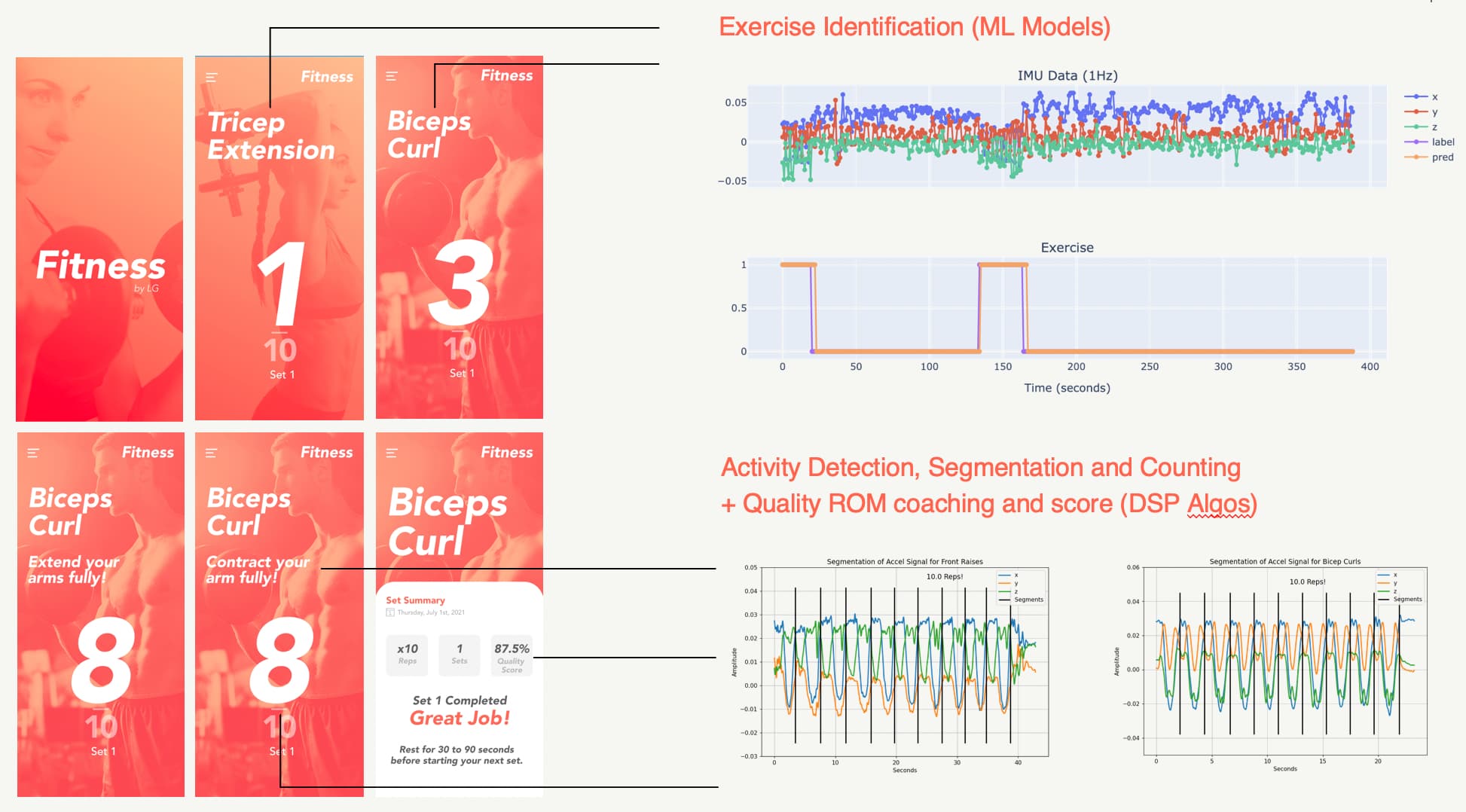
A scalable fitness and wellness platform built on a network of small wearable sensors, each with an IMU, that captures movement quality across the body. State-of-the-art ML and DSP turn the streams into exercise identification, rep counting, range-of-motion scoring and specific coaching to correct biomechanical dysfunctions while the exercise is happening. Portable, versatile across sports, and aimed first at gym and fitness enthusiasts, with the goal of being the first wearable that acts as a personal trainer.
03My role
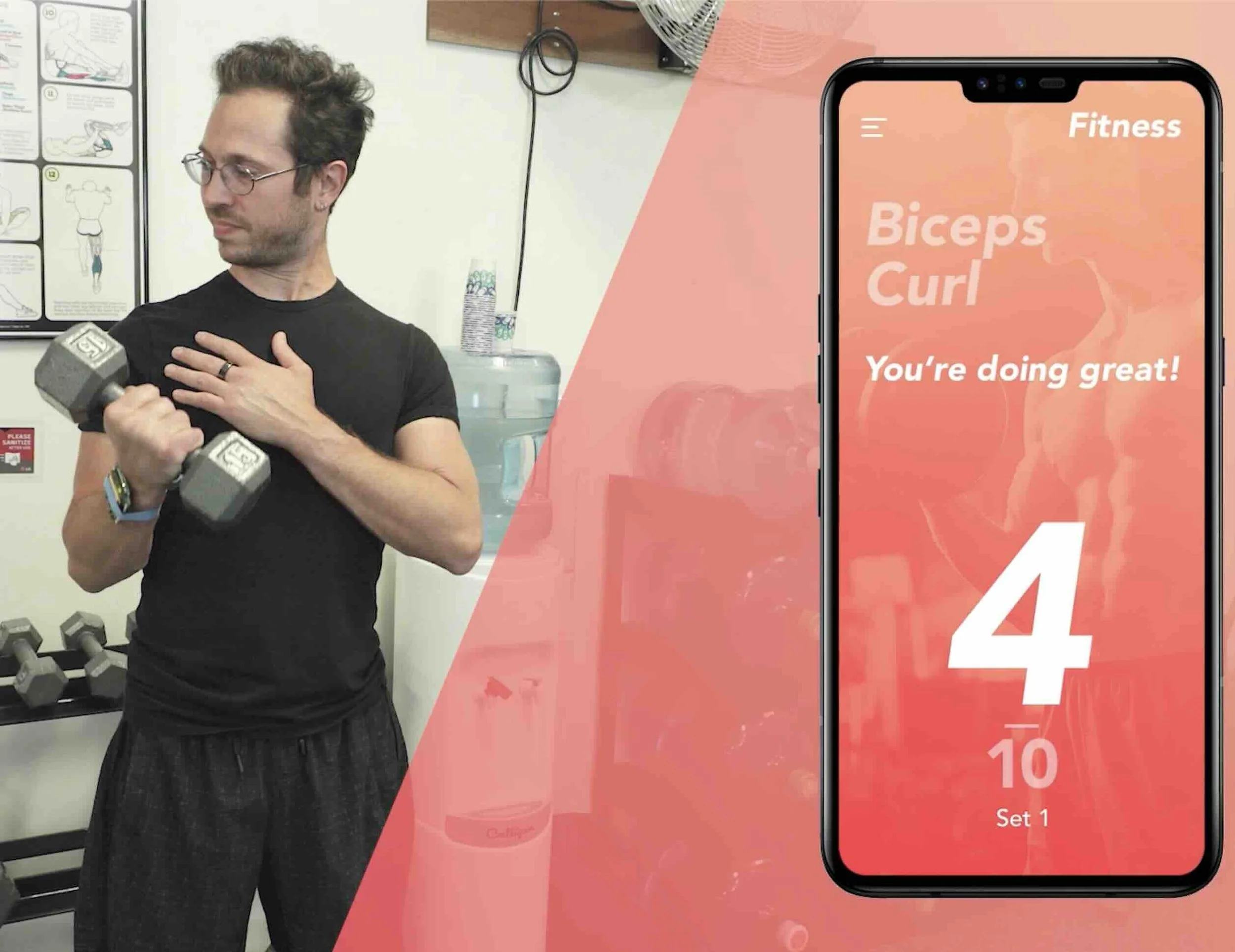
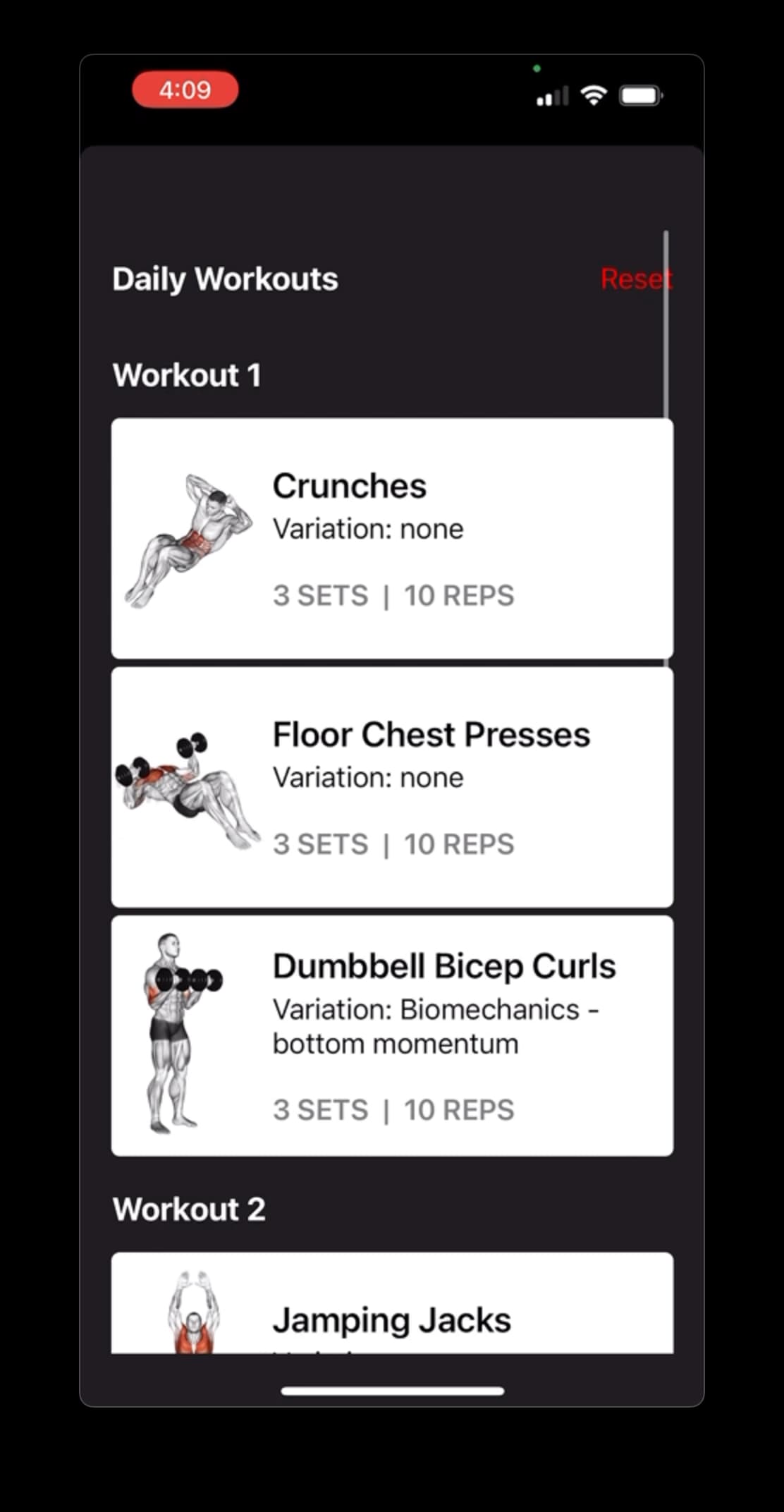
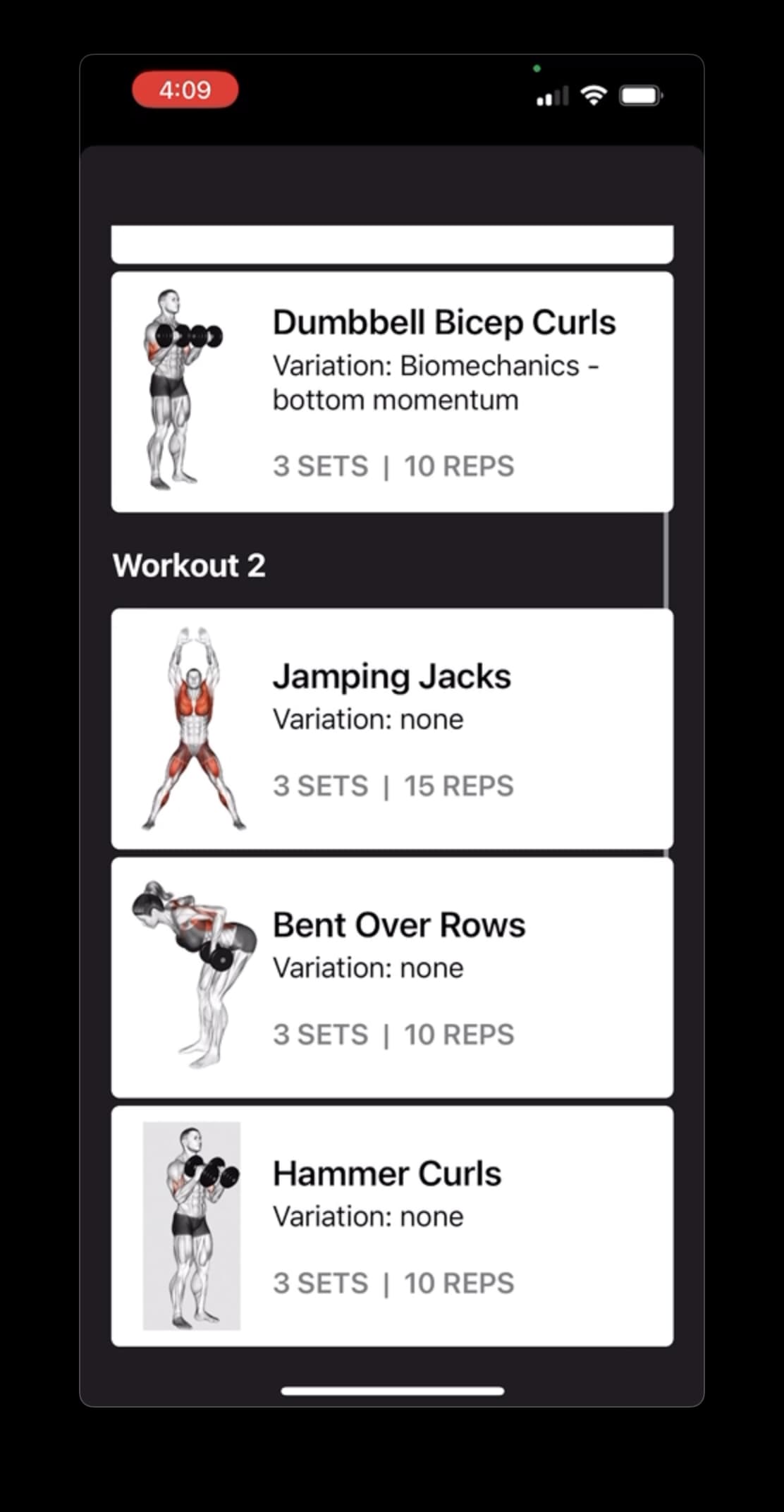
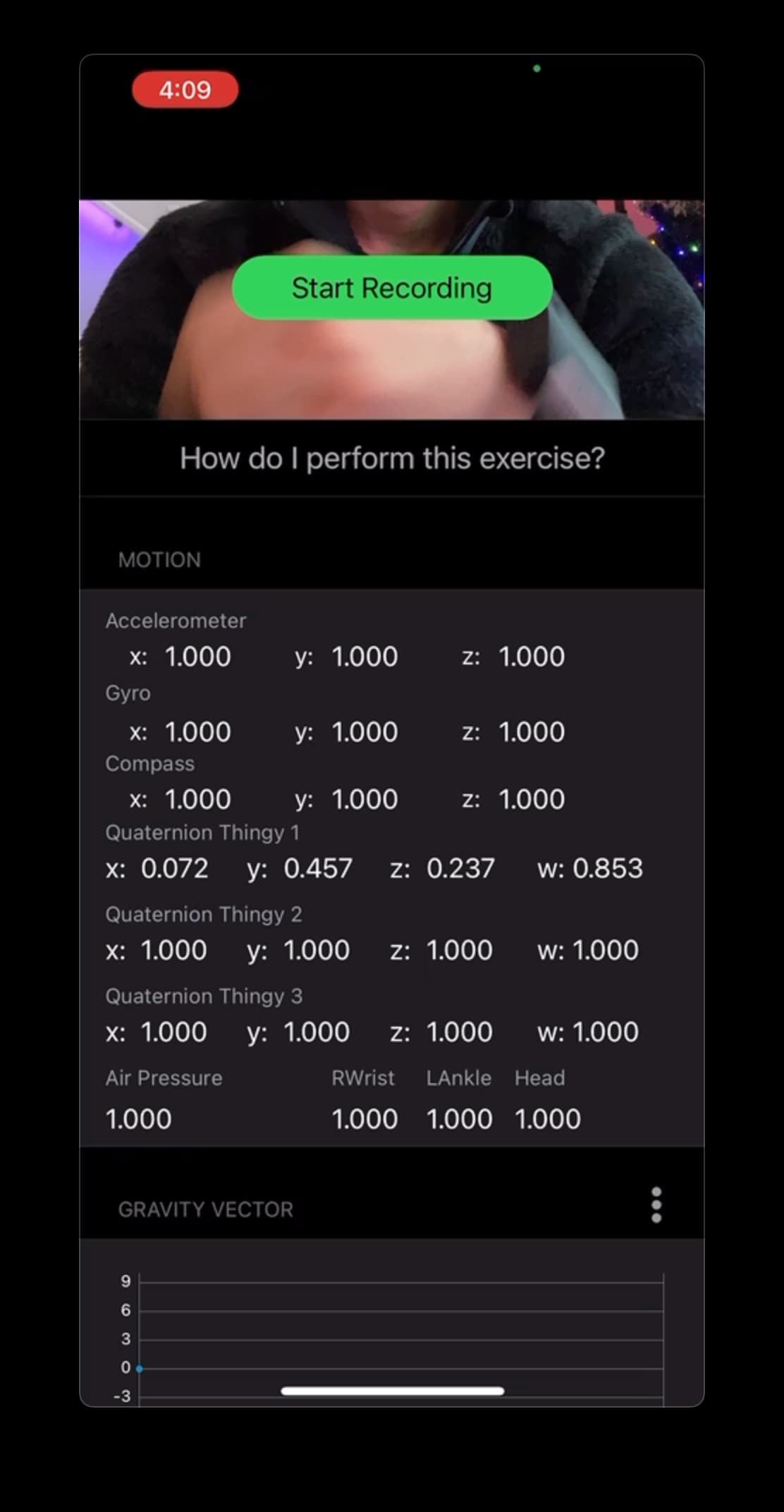
I led a cross-functional team of designers, backend engineers and AI/ML engineers. I also personally developed the front end of two iPhone applications in Swift: an internal data collection app used for months by the team to gather labeled IMU data for training, and the user-facing prototype app that shows the trained system identifying exercises, counting reps, managing recovery time and coaching form from live sensor data.
04How it worked
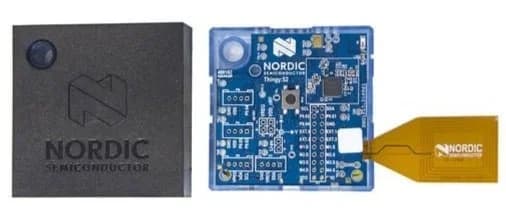
Wearable nodes stream IMU data to the phone. ML models identify the exercise from the motion signature; DSP algorithms detect activity, segment motion, count repetitions and evaluate range of motion to produce a movement quality score. After each set the user sees reps completed, a quality score and personalized feedback. Early prototyping used the Nordic Thingy:53, a sensor-rich development device with wireless connectivity, as a stand-in for the final hardware.
05Prototype / product
06Outcome
A working platform prototype with trained models, two iOS applications and a concept film demonstrating real-time coaching. The project fed LG's Edge AI work on running intelligent systems reliably on resource-constrained devices.
- Working end-to-end prototype
- Two iOS apps built in Swift
- Trained exercise-identification models