HMI for Advanced Seat Adjustments
One controller, three modes and localized vibration feedback to tame powered seats with more than 28 ways to adjust.
- Company
- Faurecia
- Year
- 2019 — 2020
- Role
- Concept, interaction design and fully functional prototype on an automotive seat
- Team
- Cockpit of the Future
- Location
- Sunnyvale, CA
Technology
- Multi-mode rotary controller
- Localized seat vibration feedback
- Anthropometry-based adjustment logic
- Powered seat actuation
01The opportunity
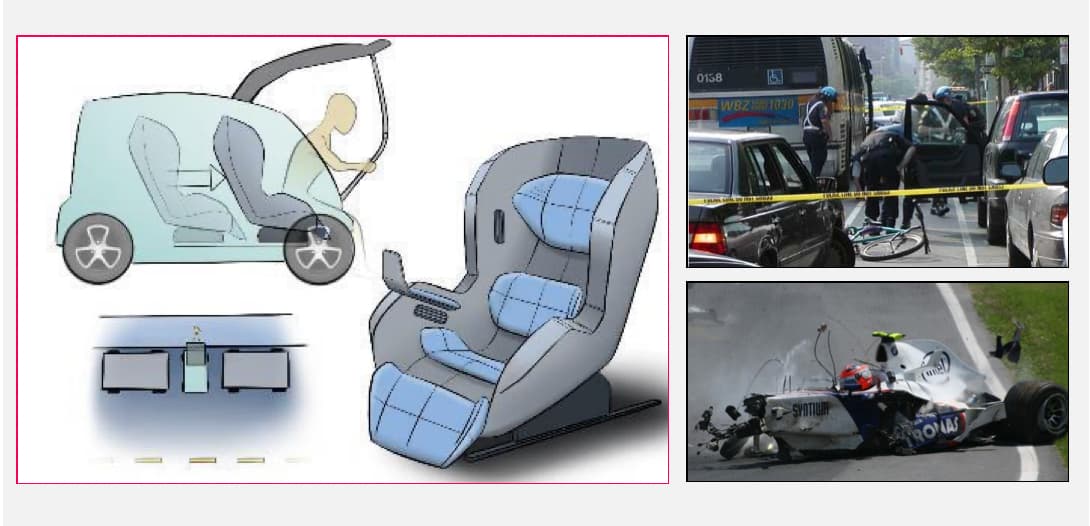
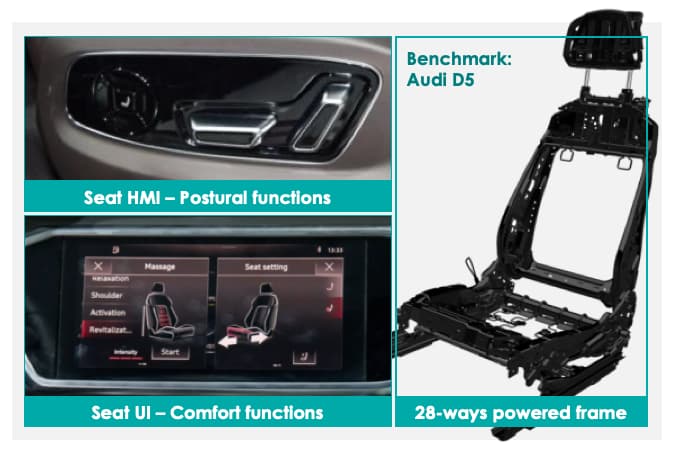
Modern powered seats offer more than 28 ways to adjust, with more coming. Research shows many users never adjust their seat properly, which means discomfort, frustration and features nobody uses. Adding a button per function had reached its limit, and pushing everything onto a touchscreen is the wrong answer in a car.
02The idea
An HMI that manages the growing number of seat functions without overwhelming the user, scales without adding physical controls, and works without a display. Controls align with the user's anthropometry, applying an 80/20 logic to reach good posture quickly, and make advanced functions discoverable rather than hidden. The design adapts across vehicle situations and autonomy levels from L2 to L4.
03My role
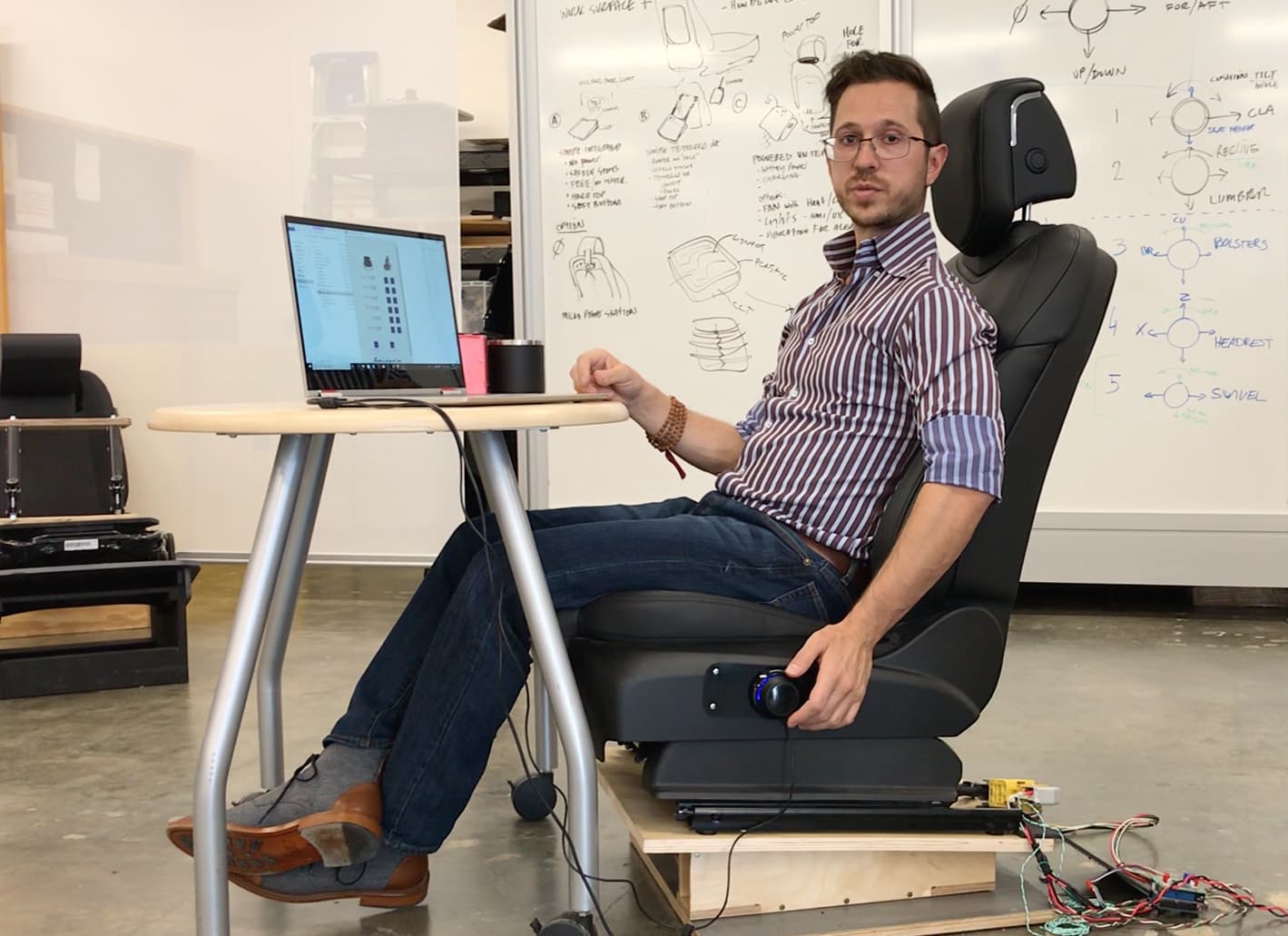
I designed and built the fully functional prototype during my time at Faurecia: the controller, the mode structure, the multimodal feedback and the installation on an automotive seat.
04How it worked
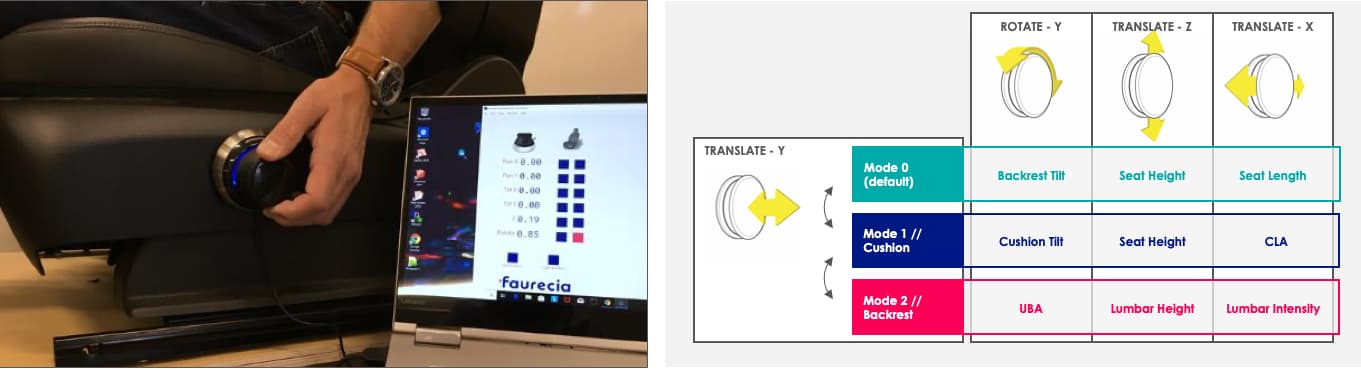
A single controller cycles through modes with a tap. Mode 0 adjusts the whole seat: backrest tilt, height and length, with full-seat vibration confirming the zone. Mode 1 targets the cushion: tilt, height and length, with localized vibration in the cushion. Mode 2 reaches upper back, lumbar height and lumbar intensity, with localized vibration in the backrest. The feedback confirms what is being adjusted without a glance.
05Prototype / product
06Outcome
For Faurecia, a demonstrated HMI for advanced seating and multi-function seats. For automotive manufacturers, a scalable approach bridging current and future in-vehicle experiences. For users, faster, better posture and a frustration-free adjustment process.
- Fully functional prototype on a production seat
- Three-mode, display-free interaction